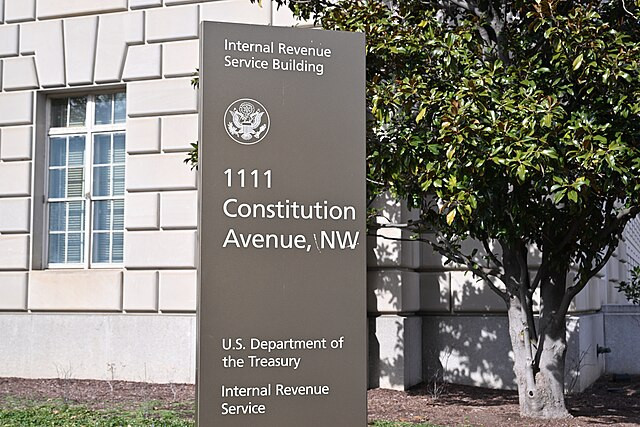
The Internal Revenue Service and the U.S. Treasury Department have released new guidance explaining how millions of American workers can claim federal deductions on cash tips and overtime income for the 2025 tax year, detailing the rules enacted under President Donald Trump's "One Big Beautiful Bill." The instructions arrive ahead of the upcoming filing season and outline how taxpayers can determine eligible amounts even when employers do not separately report tips or overtime on annual forms.
The guidance clarifies that workers may deduct up to $25,000 in qualified tips annually from 2025 through 2028. The deduction phases out for taxpayers with modified adjusted gross income above $150,000, or $300,000 for joint filers. Treasury officials said the IRS is updating tax forms and instructions to ensure filers can claim the new benefits without needing additional documentation from employers.
To illustrate the rules, the IRS released multiple scenarios addressing common employment situations. In one example, a restaurant server whose Form W-2 shows $18,000 in reported tips may use the same amount when calculating qualified tips for the deduction. Another example involves a self-employed worker receiving $7,000 in tips through a third-party settlement organization; if those tips are recorded separately by the worker, they may be used to determine the tip deduction even if the Form 1099-K does not break out the amounts.
The new law also adds a tax break for overtime earnings. Workers may deduct up to $12,500 in overtime income, or $25,000 for joint filers, provided the overtime exceeds their regular rate of pay. The deduction follows the same MAGI phase-out thresholds as the tip benefit and is available whether taxpayers itemize or claim the standard deduction.
The IRS illustrated how overtime calculations work by presenting several scenarios. In one case, a worker receiving $5,000 in overtime pay can count the full amount toward the deduction. If an employee is paid double their standard rate for overtime-resulting in $20,000 in additional earnings-the agency advises dividing the figure by four to determine the deductible portion. For overtime paid at time-and-a-half, the IRS suggests including one-third of the total overtime income when calculating the allowable deduction.
The deductions, introduced for tax years 2025 through 2028, are expected to increase take-home pay for service-sector employees and workers in industries with significant overtime demands. Policy analysts note, however, that documentation may be closely reviewed during tax return processing, particularly in cases where employers do not separately identify tip or overtime amounts. Accurate record-keeping, they say, will be essential for taxpayers seeking to maximize the benefits.