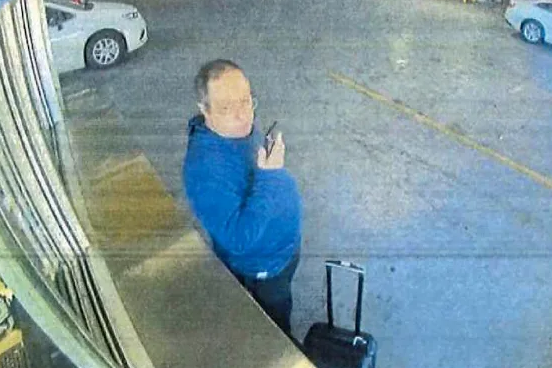
Authorities investigating the fatal shootings at Brown University and the subsequent killing of a professor at Massachusetts Institute of Technology are examining a long trail of personal grievances and behavioral warning signs linked to the suspected gunman, Claudio Manuel Neves Valente, who was later found dead of an apparent self-inflicted gunshot wound.
New accounts from a former classmate suggest that Valente, a former physics doctoral student at Brown, displayed years earlier what one acquaintance described as social isolation, simmering anger and hostility toward peers. Those recollections have taken on added significance as investigators continue to search for a motive behind one of the deadliest academic attacks in the Northeast in recent years.
Scott Watson, now a physics professor at Syracuse University, said he first met Valente during graduate orientation at Brown in 2000. "During orientation he was sitting alone, and I walked up and said hello. He was terse at first, but we eventually broke the ice and became close," Watson said in an email to MassLive.
Watson told CNN that while the news of the attacks shocked him, "looking back, there were certain warning signs." He said Valente frequently complained about Brown, about Providence, and about living in the United States, and often expressed the view that his coursework was beneath him. "He would say the classes were too easy - honestly, for him they were," Watson said. "He already knew most of the material and was genuinely impressive."
At the same time, Watson recalled repeated problems in Valente's interactions with others. He described one incident in which Valente harassed a Brazilian classmate by repeatedly calling him a "slave," prompting Watson to intervene to defuse the situation. Watson said Valente struggled socially and could become openly aggressive toward fellow students.
The first attack unfolded on Dec. 13, when Valente allegedly entered Brown's Barus & Holley Building during a study session and opened fire. Two students - Ella Cook, 19, and Mukhammad Aziz Umurzokov, 18 - were killed, and nine others were wounded, according to authorities. The shooting triggered a campus lockdown and a multistate manhunt.
Two days later, on Dec. 15, investigators say Valente traveled to Brookline, Massachusetts, where he fatally shot Nuno F.G. Loureiro, 47, a professor at MIT, inside his home. Officials said Loureiro and Valente had overlapping academic histories, though the nature of any personal connection remains under investigation.
Law enforcement officials said ballistic analysis tied one firearm recovered with Valente to the Brown shooting and a second weapon to Loureiro's killing. Despite those links, authorities have not publicly identified a definitive motive or explained why those specific victims or locations were targeted.
Valente's body was discovered on Dec. 18 inside a storage facility in Salem, New Hampshire, following a coordinated search involving local, state and federal agencies. An autopsy concluded that he died from a self-inflicted gunshot wound, likely on Dec. 16, the day after the MIT professor's death.
Investigators credited a tip from a witness identified only as "John," who reported a suspicious vehicle, with helping authorities trace Valente's movements through surveillance footage and license plate data. Rhode Island's attorney general said the investigation remains active, noting that "many unanswered questions" remain about the trajectory of events that led from a university classroom to a suburban home.