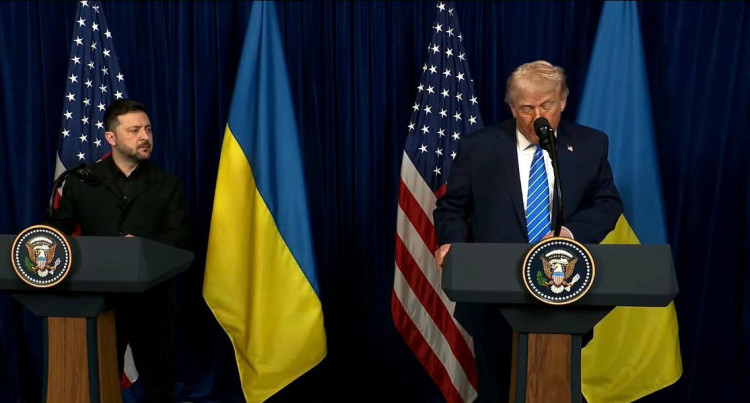
President Donald Trump said negotiations aimed at ending the war in Ukraine are nearing completion after closed-door talks with Ukrainian President Volodymyr Zelensky at Mar-a-Lago, telling reporters the two sides are "maybe very close" to a deal and "have the makings of a deal." The remarks, delivered after hours of private discussions in Florida, marked one of the most detailed public assessments yet of U.S.-led diplomacy to halt Europe's deadliest conflict in decades.
Speaking alongside Zelensky, Trump said the negotiations had covered nearly all major issues, adding that "somebody would say 95 per cent" of the work had already been done. He cautioned, however, that final outcomes would only become clear "in a few weeks," underscoring lingering uncertainty despite the optimistic tone.
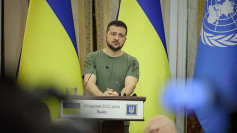
Zelensky echoed that assessment, calling the meeting "excellent" and praising the pace of talks between Ukrainian and American officials. He said the discussions had produced meaningful alignment on core elements of a proposed settlement framework, particularly around long-term security arrangements for Ukraine.
At the center of the negotiations is what Zelensky described as a 20-point framework, which he said is now close to agreement. He identified security guarantees as "the key milestone in achieving a lasting peace," signaling that Kyiv views external assurances as essential to any durable settlement with Russia.
According to the outline discussed in Florida, Ukraine would receive long-term security guarantees backed by the United States and European partners. Trump said U.S. officials were "almost" aligned with allies on those commitments, reflecting intensified coordination with European governments.
The proposal also envisions limits on active combat along existing front lines, including arrangements affecting Donetsk, Luhansk, Zaporizhzhia and Kherson. Ukrainian forces would maintain their current strength of roughly 800,000 troops, while reconstruction plans tied to the negotiations could reach an estimated $800 billion, according to figures referenced during the talks.
The most contentious element remains the Donbas region, which Trump acknowledged is a "very tough issue." Russia currently occupies roughly one-fifth of Ukrainian territory, including most of Donetsk and Luhansk, and has demanded further withdrawals by Ukrainian forces. Kyiv, by contrast, has argued for arrangements that would preserve Ukrainian administration or special economic zones under domestic control.
Trump acknowledged that territorial outcomes remain uncertain, stating that some areas could be "taken over the next period of a number of months," a remark likely to fuel debate in Kyiv and among Western allies. His comments marked a shift from earlier statements suggesting Ukraine might eventually reclaim all occupied land.
Despite the optimism, Trump warned that negotiations could still fail, saying talks could go "really badly" if momentum falters. He also raised the possibility of broader diplomacy, saying a trilateral meeting involving the United States, Russia and Ukraine could take place "at the right time."
While Moscow was not represented at the Mar-a-Lago discussions, Trump indicated that outreach to Russian counterparts remains part of the process. The administration has framed the current phase as preparatory, aimed at aligning U.S. and Ukrainian positions before engaging directly with the Kremlin.