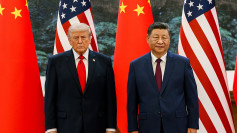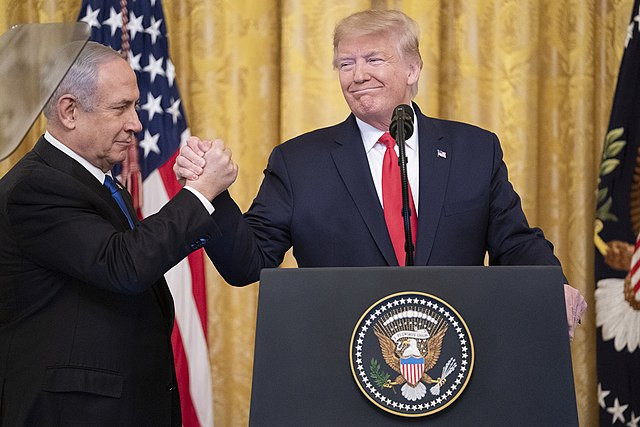
Israeli Prime Minister Benjamin Netanyahu's visit to Mar-a-Lago this week has emerged as a pivotal moment for both diplomacy and domestic survival, as talks with U.S. President Donald Trump intersect with fragile Gaza ceasefire negotiations and mounting political pressure inside Israel. According to CNN, the meeting is being viewed by aides as a strategic effort to stabilize Netanyahu's leadership while shaping the next phase of U.S.-brokered diplomacy in the region.
The encounter comes as Israel faces deep internal strains and uncertainty over the future of the Gaza ceasefire. Netanyahu's coalition remains vulnerable, with early elections increasingly possible well ahead of the scheduled October 2026 vote. Officials close to the prime minister say his appearance alongside Trump is designed to project momentum at a moment when both his governing coalition and public standing remain under strain.
Trump, whose influence in Israeli politics remains substantial, is once again positioned as a central figure in Netanyahu's political calculus. During Israel's repeated election cycles between 2019 and 2021, Trump's public support and policy gestures - including recognition of Israeli sovereignty over the Golan Heights and the brokering of the Abraham Accords - were widely used by Netanyahu to bolster his standing. That dynamic, aides say, is now resurfacing.
According to CNN, Netanyahu's advisers see Trump as uniquely capable of reframing the narrative after the fallout from the Oct. 7, 2023 Hamas attack. A September 2025 Gallup poll cited by the network showed U.S. leadership enjoying 76% approval among Israelis, compared with just 40% approval for Israel's own government, underscoring why Netanyahu views alignment with Trump as politically advantageous.
The Gaza ceasefire remains the most immediate test. Trump is expected to press Netanyahu on advancing what negotiators describe as Phase 2 of the agreement, which would include further Israeli withdrawals and discussions over postwar governance in Gaza. Axios reported that U.S. officials are concerned Netanyahu may be deliberately slowing the process, while Trump's team fears a renewed escalation if talks stall.
Israeli officials acknowledge that Netanyahu faces sharp resistance from within his coalition. Ultra-nationalist partners oppose deeper concessions, and military leaders remain wary of any arrangement that leaves Hamas partially intact. According to Israeli sources cited by U.S. media, Netanyahu may seek approval for one additional military operation before moving forward, presenting it as a security necessity rather than a political delay.
Beyond Gaza, Netanyahu is expected to use the Mar-a-Lago meeting to outline broader regional ambitions. These include reviving efforts to expand the Abraham Accords, reopening discussions with Saudi Arabia and maintaining coordinated pressure on Iran. Each of those objectives aligns with Trump's stated desire to shape a foreign-policy legacy centered on high-profile diplomatic deals.
Still, progress remains constrained by regional realities. Arab governments have been reluctant to deepen normalization while the Gaza conflict remains unresolved, and Iran's nuclear and missile programs continue to loom over regional diplomacy. Trump, while supportive of Israel, has also signaled caution about endorsing new military escalations.
The timing of the visit reflects Netanyahu's precarious domestic position. Two looming threats dominate his political calendar: a contentious ultra-Orthodox conscription dispute that has strained his coalition, and a March 2026 budget deadline that could collapse the government if negotiations fail. Against that backdrop, international diplomacy has become a tool of political survival as much as foreign policy.