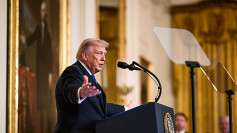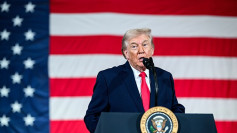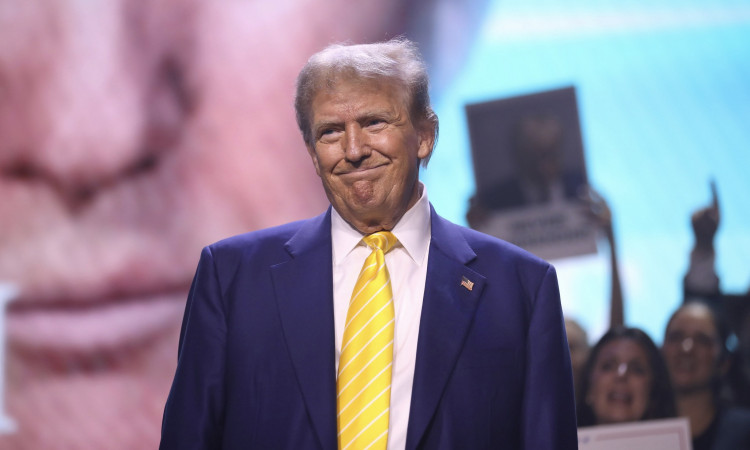
Donald Trump is set to deliver a nationally televised address at 9 p.m. ET on escalating tensions with Iran, as the White House warned of an "important" update following Tehran's move to impose tolls and restrict U.S. and Israeli vessels in the strategically vital Strait of Hormuz.
White House press secretary Karoline Leavitt announced the address on X, urging viewers to tune in as geopolitical risks intensify around one of the world's most critical energy corridors. The announcement comes amid a rapidly evolving conflict that has drawn in global markets, military assets and diplomatic efforts.
The immediate trigger for the address is Iran's parliamentary approval of new measures targeting maritime traffic through the Strait of Hormuz, a 33-kilometer-wide passage that handles roughly 21% of global oil shipments. Iranian state media described the plan as a combination of toll enforcement, enhanced naval oversight and restrictions on specific foreign vessels.
Energy analysts say the implications are immediate and far-reaching. Any disruption to tanker flows through the strait could trigger sharp price movements and logistical bottlenecks across global supply chains.
Key exposure points include:
- Approximately one-fifth of global crude oil and liquefied natural gas exports
- Major shipments from Qatar, Saudi Arabia and the United Arab Emirates
- Limited rerouting capacity, increasing transport costs and delivery delays
The current escalation follows months of direct confrontation. U.S. strikes earlier this year targeted Iranian nuclear facilities, including Fordow and Natanz, under what the administration described as Operation Midnight Hammer. Trump has claimed those operations "obliterating Tehran's atomic ambitions," a characterization that has not been independently verified in the provided material.
Iran has responded with both military and economic measures. The proposed toll system and vessel restrictions are widely interpreted by analysts as an attempt to assert control over the waterway while offsetting the impact of sanctions.
The White House has signaled a dual-track approach. Trump recently suggested U.S. forces could withdraw within "two to three weeks," while simultaneously warning of further strikes on Iranian infrastructure if negotiations fail. The administration has also demanded "unconditional surrender," even as it describes diplomacy as the "first option."
Military stakes continue to rise. At least four U.S. service members have been killed in the conflict, according to the report, and naval assets-including the U.S. Fifth Fleet-remain deployed in the region to ensure what officials describe as freedom of navigation.
The situation is further complicated by legal and geopolitical tensions. Analysts note that selective bans on shipping could conflict with international maritime law, while enforcement mechanisms involving Iranian forces-and potentially Oman-could transform the strait into an active flashpoint between regional and global powers.
Markets are already reacting. Brent crude prices have trended higher amid uncertainty, while shipping firms are evaluating contingency routes that would significantly increase costs. European and U.K. energy markets are particularly exposed, given their reliance on Gulf exports.