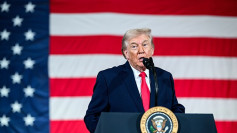
President Donald Trump sparked immediate controversy during Holy Week after remarks about being called a "king" coincided with a White House Easter event in which his longtime adviser Paula White-Cain compared his political struggles to the crucifixion of Jesus Christ, drawing sharp criticism from clergy and theologians across denominations.
The episode unfolded across two closely timed moments in Washington. At a White House Easter lunch attended by more than 100 evangelical and Catholic leaders, White-Cain delivered a speech linking Trump's legal and political battles to Christian theology. Separately, the president made public remarks referencing the "king" label that critics and supporters alike have debated for months.
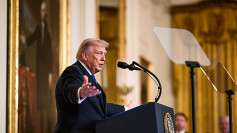
"They call me KING now, do you believe it?" Trump said ahead of a scheduled national address on Iran. He followed with a remark framed as humor: "I'm such a king I can't get a ballroom approved," adding, "I could be doing a LOT MORE if I was a KING."
The comments came as the administration hosted the Easter gathering in the East Room, an event described as a celebration of religious liberty. The program took a more contentious turn when White-Cain addressed Trump directly, invoking religious imagery tied to the Passion narrative.
"Jesus taught us so many lessons through his death, burial, and resurrection. He showed us great leadership, great transformation requires great sacrifice. And Mr President, no one has paid the price like you have paid the price," she said.
She continued: "It almost cost you your life. You were betrayed, and arrested, and falsely accused. It's a familiar pattern that our Lord and Savior showed us. But it didn't end there for him, and it didn't end there for you."
"And, sir, because of his resurrection, you rose up. Because he was victorious, you were victorious."
Video of the remarks, briefly posted to official White House channels before being removed, circulated widely online, intensifying scrutiny of both the content and the administration's messaging during a major Christian observance.
Religious leaders responded swiftly. Catholic theologian Rich Raho wrote on X, "Blasphemous. It's stunning to see a US Bishop standing right there on the stage while Paula White compares Trump to Jesus Christ."
Jesuit priest James Martin added, "Asking God, in a public prayer, to help a political leader make wise decisions? Yes. Comparing a political leader, in a public prayer, to the sinless Son of God during Holy Week? No."
Pastor Benjamin Cremer described the remarks as "blasphemy," writing, "This is what it sounds like to take Jesus' name in vain." Conservative commentator Taylor Marshall labeled the moment "insanity," while political commentator Lauren Windsor argued, "These evangelicals think that Trump is going to usher in the second coming of Christ. That's why so many are eager for war in Iran, in the Holy Lands."
The controversy unfolded alongside broader geopolitical tensions. Pope Leo XIV had already criticized U.S. military actions in Iran, stating that Jesus "does not listen" to the prayers of those who wage war, adding a global religious dimension to the domestic debate.
Trump's remarks also reflected a pattern of rhetorical framing that has evolved over time. In October 2025, he said, "They're referring to me as a king. I'm not a king." His latest comments, however, appeared to embrace the label more openly, even if delivered in a joking tone.