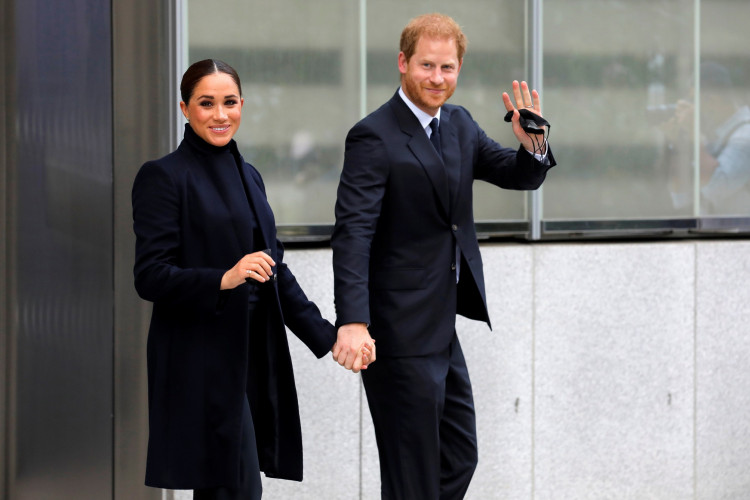
Prince Harry and Meghan Markle could generate as much as $10 million from their current private tour of Australia, according to financial analysts, underscoring how the couple's post-royal strategy is evolving into a hybrid model blending philanthropy, media production and high-end commercial engagement.
The Duke and Duchess of Sussex arrived in Australia on April 14 for their first visit since 2018, but unlike their previous government-backed tour, the 2026 trip is privately funded and structured around revenue-generating appearances. The shift has drawn attention from both supporters and critics, as observers assess how effectively the couple can convert global recognition into sustained commercial returns.
Ted Jenkin, managing partner at Exit Wealth Advisors, told media outlets the tour could yield "$10 million or more" in total value, describing the couple's approach as one centered on "audience aggregation." His analysis frames each public appearance as not just a standalone event, but a catalyst for broader monetization across media, branding, and partnerships.
According to Jenkin's breakdown, the projected revenue includes multiple streams:
- Speaking engagements and appearances: approximately $2 million
- Sponsorships and brand partnerships: around $3.5 million
- Media and content production: estimated $4.5 million
While none of these figures have been confirmed by the couple or their representatives, they reflect growing industry consensus that the Sussexes are operating more like global media entrepreneurs than traditional public figures.
A central component of the tour is Meghan Markle's participation in a three-day luxury retreat in Sydney, held from April 17 to 19 at a beachfront hotel. The event, linked to the "Her Best Life" platform, offers tiered packages including a VIP experience priced at $3,199 per attendee, positioning it firmly within the premium wellness and networking market.
Journalist Rob Shuter reported that Markle may have secured a $1 million appearance fee for the retreat, though that figure remains unverified. Even without confirmation, the pricing structure and format-featuring controlled access, curated programming, and personal interaction-highlight a strategy designed to maximize exclusivity and revenue per attendee.
The broader tour itinerary blends these commercial elements with philanthropic engagements. The couple has already visited institutions such as the Royal Children's Hospital in Melbourne and the Australian National Veterans Arts Museum, maintaining continuity with causes they have long supported while also sustaining public visibility.
This dual-track model-pairing charitable outreach with monetized appearances-has become a defining feature of the Sussex brand since their departure from royal duties in 2020. It allows them to retain a mission-driven narrative while funding operations independently of state support.
At the same time, the approach has intensified scrutiny. Critics argue that the blending of advocacy and commercial activity risks blurring boundaries, particularly in markets like Australia where royal tours have historically been publicly funded and symbolically distinct from private enterprise.
What distinguishes this tour is not only its structure but the transparency of its financial framing. Analysts, rather than governments, are now quantifying the value of royal-adjacent influence, and projections like Jenkin's have turned the Sussexes' earning potential into a subject of ongoing public analysis.
Key uncertainties remain. No contracts have been disclosed, and no official revenue figures have been released. Beyond projections and unverified claims, the financial architecture of the tour remains largely opaque, leaving observers to interpret its significance through partial data and evolving market signals.