A Pentagon decision to award a $620 million strategic loan to a little-known rare-earth minerals startup has sparked new scrutiny in Washington after a ProPublica investigation reported that Donald Trump Jr. held an undisclosed investment in the company months before the deal was approved.
The investigation centers on Vulcan Elements, a North Carolina-based rare-earth magnet manufacturer founded in 2023, and a financing package that transformed the company's fortunes almost overnight. According to ProPublica, the conditional loan represented the largest commitment ever made by the Pentagon's Office of Strategic Capital and helped propel Vulcan's estimated valuation from roughly $200 million to approximately $2 billion within months.
The report raises questions about the role of White House officials, the speed of the approval process, and whether adequate safeguards were in place as the Trump administration accelerated efforts to strengthen domestic supplies of critical minerals used in defense technologies.
According to ProPublica, Pentagon officials said the transaction originated not through the agency's standard review channels but after intervention from Peter Navarro, President Trump's senior counselor for trade and manufacturing. Officials familiar with the process told the publication that Vulcan became a priority project after direct communications from the White House.
One Pentagon source quoted by ProPublica described the pressure surrounding the transaction in stark terms: "The call came from the White House: We have to get this done."
The loan was announced in November 2025 as part of a broader partnership involving Vulcan and ReElement Technologies, an Indiana-based rare-earth refining company. The Defense Department said the funding was intended to strengthen domestic production capabilities for strategic minerals considered vital to national security and manufacturing.
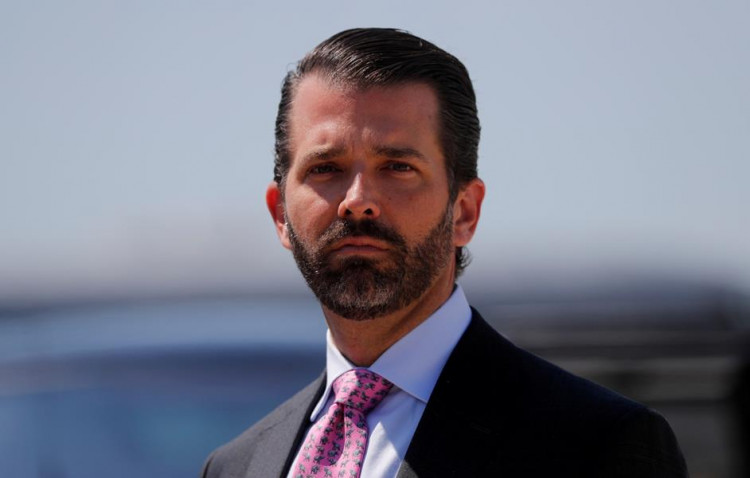
The controversy intensified because of Trump Jr.'s connection to the company. Three months before the Pentagon announcement, Vulcan disclosed a $65 million Series A financing round that included participation from 1789 Capital, a venture capital firm where Trump Jr. serves as a partner. Neither the company nor the investment firm publicly disclosed the size of the stake acquired.
Trump Jr.'s representatives rejected suggestions of improper influence. A spokesperson told ProPublica that he "has no knowledge about how this deal came together" and does not discuss his investments with government officials. A separate spokesperson for 1789 Capital said the firm "played no role" in securing the Pentagon financing and did not learn of the loan before it was publicly announced.
The White House also defended the transaction. In a statement cited by ProPublica, an administration spokesperson said officials were acting "in the best interest of the American people" and that the administration was working with private industry "to secure America's critical mineral supply chain at Trump Speed."
Questions surrounding the approval process have drawn attention on Capitol Hill. Representative Maxine Dexter, the top Democrat on the House Natural Resources Oversight and Investigations Subcommittee, attempted to subpoena Trump Jr. to testify about the transaction during a March hearing. The effort was blocked by Republican members.
In a statement released by her office, Dexter said: "This is the oligarchy on full display, and I'm committed to ending corruption."
The deal has also attracted scrutiny because it reportedly bypassed several procedures commonly associated with major federal financing decisions. According to House Natural Resources Committee Democrats, the project did not undergo the same competitive review and technical evaluation processes that traditionally accompany large public investments.
The matter carries added significance because of the personal relationship between Navarro and Trump Jr. ProPublica noted that Trump Jr. publicly supported Navarro during his legal battles and later hosted him on his streaming program. In one episode discussing rare-earth supply chains, Trump Jr. referred to Navarro as "my boy," while Navarro called Trump Jr. "brother."
Neither man publicly discussed Vulcan during those appearances.
Ethics experts interviewed by ProPublica expressed concern about the appearance created by the arrangement, even absent evidence of direct involvement by Trump Jr. Richard Painter, former chief White House ethics lawyer under President George W. Bush, offered one of the investigation's sharpest criticisms.
"This is our money they're spending," Painter told ProPublica. "This is corruption we pay for."