President Donald Trump said Monday that a diplomatic agreement with Iran could be reached within days and predicted the Strait of Hormuz would reopen immediately following a settlement, even as Israel and Iran exchanged warnings that their latest military confrontation could quickly reignite.
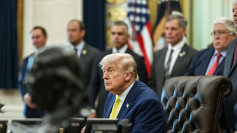
Speaking to reporters in New York after attending the NBC Finals, Trump projected optimism about ongoing negotiations aimed at ending the conflict and preventing Iran from obtaining nuclear weapons. His comments came only hours after both Israel and Iran announced suspensions of military operations following a brief but dangerous escalation that raised fears of a wider regional war.
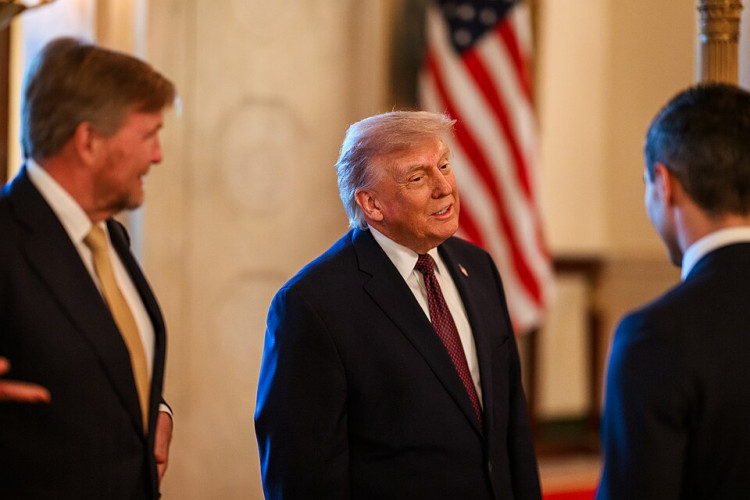
Trump said a breakthrough could arrive in "two or three days" and described the prospective agreement as "very good." He added that any deal would "not in any way allow nuclear weapons" and said the Strait of Hormuz, one of the world's most important energy transit routes, would reopen "immediately" after an agreement is finalized.
The diplomatic push followed a series of strikes that began after Iran launched missiles at Israel in response to Israeli attacks on a Beirut suburb widely regarded as a Hezbollah stronghold. The exchange marked the first direct Iranian missile attack on Israel in roughly two months and reignited concerns about broader instability across the Middle East.
Although both governments announced a halt to operations on Monday, neither side signaled that the confrontation had fully ended.
Israeli Prime Minister Benjamin Netanyahu said Israel's military campaign was a response to Iranian aggression.
"After Iran attacked Israel" he "directed the IDF to strike military and economic targets throughout Iran," Netanyahu said in a statement.
He added that "the fire on this front has been halted, because after the terrorist regime in Tehran was struck, it stopped attacking us," while warning that "if that terrorist regime makes the mistake of attacking us again, we will respond with force."
Iran issued a similarly defiant message. Tehran's Khatam al-Anbiya Central Headquarters announced that the "suspension of Armed Forces operations is announced," while claiming that Iranian forces had "delivered a painful response to the regime in support of the oppressed people of Lebanon."
According to the semiofficial Tasnim news agency, Iranian officials described the missile campaign as "a response from which the illegitimate Zionist regime and its supporters should have learned a lesson."
The statement warned that "If aggressions and hostile actions continue, including in southern Lebanon, far more severe and crushing measures than before will follow."
Despite the pause in fighting, Netanyahu suggested that Israel would not tolerate what he described as a new strategic reality involving coordinated pressure from Iran and Hezbollah.
"Iran and Hezbollah tried to impose a new equation" on Israel, he said, calling the situation "intolerable and completely unacceptable."
In one of the strongest passages of his statement, Netanyahu declared: "They thought they could launch attacks from Lebanon and Iran against Israel and that we would not act. That did not happen, and it will not happen. Not on my watch."
The comment appeared to contrast with Trump's public appeal on Sunday urging restraint and signaling that he was directing Netanyahu not to retaliate further in order to preserve diplomatic momentum.
Still, Netanyahu emphasized that communication with Washington remained strong.
"Israel has every right to self-defense, and we will exercise that right whenever necessary. I say this to you, dear citizens of Israel, just as I say it in my good conversations with my friend President Trump," Netanyahu said.