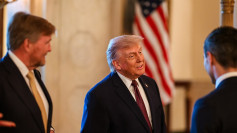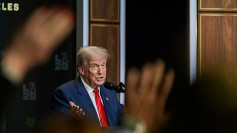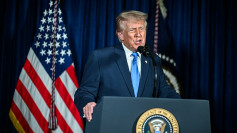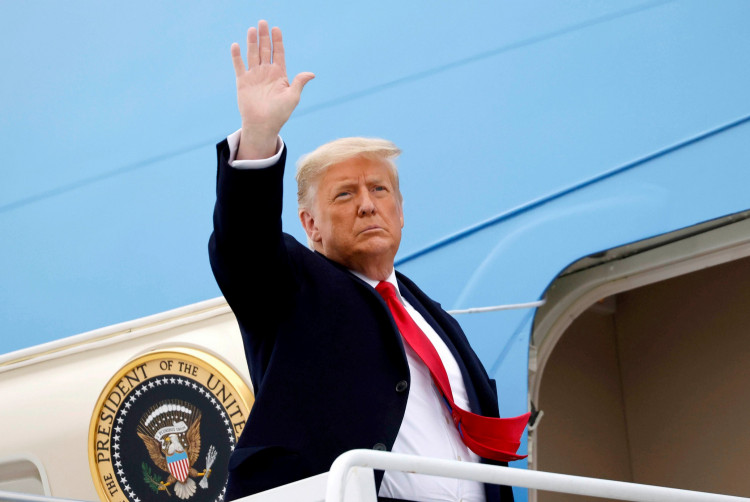
President Donald Trump's latest physical examination at Walter Reed National Military Medical Center is drawing renewed scrutiny after the White House confirmed that 22 medical specialists participated in the assessment, the highest number publicly disclosed for a presidential checkup in modern records.
The unusually large medical team, combined with the administration's refusal to identify the specialists or explain why so many were involved, has prompted questions from physicians and health policy experts about transparency surrounding the health of the 79-year-old president.
According to records reviewed by The Washington Post, Trump underwent the examination on May 27 during a three-hour visit to Walter Reed. The White House later released a three-page summary prepared by presidential physician Capt. Sean P. Barbabella, who concluded that Trump remains in "excellent health" and is "fully fit" to perform the duties of the presidency.
While presidential physicals routinely involve multiple medical experts, the scale of Trump's evaluation stands apart from previous administrations. Historical disclosures reviewed by The Washington Post show a far smaller number of specialists participating in comparable examinations.
Among the reported figures:
- President George H.W. Bush was examined by five specialists during his first presidential physical in 1989.
- President George W. Bush saw 12 specialists during his first annual examination in 2001.
- Trump was evaluated by 11 specialists during a 2019 physical.
- His 2025 examination reportedly involved 14 specialists.
- The 2026 assessment included 22 specialists.
The White House acknowledged that some of the individuals counted as specialists were generalist physicians. Even with that clarification, the overall number has attracted attention from medical professionals.
"It is an extraordinary number," Jonathan Reiner, the cardiologist who previously treated former Vice President Dick Cheney, told The Washington Post. "What specialities do they represent? Why so many?"
Rather than providing a breakdown of the medical disciplines involved, the White House issued a general statement defending the process.
"The involvement of multiple specialists reflects a comprehensive, multidisciplinary evaluation consistent with best practices for executive-level medical care," the statement said. "We have nothing to hide."
Barbabella's report outlined an extensive battery of tests. According to the memo, Trump underwent advanced cardiac screening, including an echocardiogram, a coronary CT scan and an AI-assisted electrocardiogram analysis. The report stated that the AI-enhanced ECG estimated Trump's cardiac age to be approximately 14 years younger than his chronological age.
The report also disclosed several health metrics:
- Weight: 238 pounds, up 14 pounds from April 2025.
- Blood pressure: 105/71 mmHg.
- Temperature: 98.7 degrees Fahrenheit.
- Continued monitoring for chronic venous insufficiency.
- Recommendation to increase physical activity and pursue weight management.
The White House also addressed two issues that have fueled public speculation over the past year: visible bruising on Trump's hands and swelling in his lower legs. Barbabella attributed the bruising to frequent handshaking combined with aspirin use and said the president's venous insufficiency had shown "slight improvement from last year."
Yet some physicians argue the report leaves significant questions unanswered. Although the memo references advanced cardiovascular testing, it does not include the underlying measurements, imaging results or detailed findings typically reviewed by independent medical experts.
S. Jay Olshansky of the University of Illinois Chicago, who has studied presidential health and longevity, told STAT News that greater disclosure would help address public concerns.
"Nothing should be hidden," Olshansky said, calling for the release of more complete medical information rather than physician summaries that may be subject to interpretation.
The debate extends beyond Trump's health. Experts note that no federal law requires presidents to release medical records, leaving disclosure largely at the discretion of the White House.
Sara Rosenthal, a bioethicist at the University of Kentucky who studies presidential health transparency, told STAT News that the current system creates an inherent tension between privacy and public accountability.
"I think we can expect very little disclosure about the true health status of any president unless they're in perfect health," Rosenthal said.