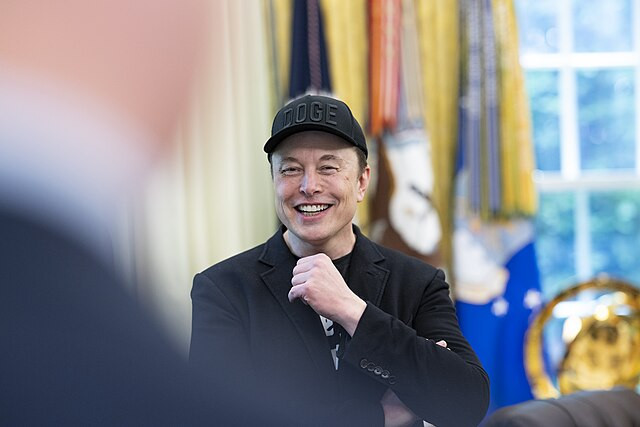
Elon Musk turned a question about his public image into a broad attack on the news media during a July 23 interview at Tesla's Texas Gigafactory, telling The Economist Editor-in-Chief Zanny Minton Beddoes that journalists are hated more than he is. The exchange, which spread quickly across X, followed questions about Musk's political commentary, immigration views and increasingly polarizing role in public debate.
The confrontation began when Minton Beddoes asked Musk whether he understood the hostility he draws from some members of the public. The question came during a wide-ranging discussion touching on his leadership of Tesla, SpaceX and X, as well as his influence over political and cultural conversations.
"Some people do loathe you, but do you understand why?" Minton Beddoes asked.
Musk initially acknowledged that criticism exists but said it had little effect on him. He then pointed to the size of his online audience as evidence that favorable opinion outweighed the hostility directed at him.
"Maybe some people do loathe me, and that's probably true. I don't care," Musk said. "The fact that, as you pointed out, a quarter of a billion people follow me, is that I think a lot more people actually like me than don't."
Rather than directly addressing the reasons for his divisive reputation, Musk redirected the scrutiny toward Minton Beddoes and the wider media industry. His response reflected a recurring theme in his public statements: that traditional news organizations have lost credibility and are more unpopular than the executives and political figures they cover.
"I think a lot more people hate you, and the media, more than you realise," Musk told Minton Beddoes.
Musk also claimed that "the favourable view of journalists is, like, 15 percent," though he did not identify a poll or survey supporting that figure during the interview. The available material did not provide independent verification of the statistic.
He continued by telling the editor, "The shoe is on the other foot. They hate you. They hate you far more than they hate me."
Minton Beddoes responded without matching Musk's confrontational tone. She noted that her own public profile was significantly smaller than his and rejected the comparison between the attention directed at a magazine editor and one of the world's most prominent business figures.
"I think very few people know who I am relative to you, so I don't think I play in the same game," she said.
The exchange soon became a political and cultural flashpoint online. Musk's critics described the episode as a "pathetic crash-out," arguing that he had reacted defensively to a straightforward question about why some people object to his conduct and views. Others said his reliance on follower counts did not necessarily demonstrate broad approval, particularly on a platform he owns and uses to communicate directly with supporters.
Musk later extended the dispute on X, where he posted additional criticism of Minton Beddoes to his large audience. In one post, he referred to her as having a "little bird brain," language that critics said reinforced the impression that he had personalized a legitimate line of journalistic questioning.