President Donald Trump's National Security Presidential Memorandum-7 (NSPM-7) has emerged as the center of a growing dispute over the balance between national security and civil liberties, with supporters describing it as a counterterrorism directive and critics arguing it could broaden federal scrutiny of left-wing organizations and political activism.
The memorandum, signed in September 2025, has received renewed attention following the Justice Department's prosecution of 15 Minnesota activists accused of conspiring to obstruct federal immigration enforcement during protests connected to Operation Metro Surge in Minneapolis. While federal prosecutors describe the case as involving coordinated efforts to interfere with law enforcement operations, civil liberties advocates contend it illustrates how the administration is applying an increasingly expansive national security framework to protest activity.
At the center of the debate is whether NSPM-7 targets violent conduct or whether its language risks drawing constitutionally protected political beliefs into federal investigative efforts.
Critics point to language they say associates ideological movements with potential security risks. In a letter criticizing the memorandum, Democratic Reps. Mark Pocan, Jared Huffman and Pramila Jayapal argued that NSPM-7 identifies concepts such as "anti-capitalism" and "anti-Christianity" among indicators linked to violent extremism.
The lawmakers warned that such language could discourage lawful political organizing by creating uncertainty over what activities might attract federal attention. Their concerns reflect their interpretation of the memorandum rather than a judicial determination of its legal effect.
Legal scholars have also questioned how broadly the memorandum could be interpreted. According to commentary reported by the University of Pennsylvania's student newspaper, Professor Kermit Roosevelt said the directive could be viewed as "a 'pretext to harass left-wing organisations and universities,'" arguing that references connecting political beliefs with radicalization may raise constitutional questions.
Supporters of the administration reject that interpretation, maintaining that NSPM-7 is intended to address political violence rather than protected speech or lawful advocacy. The White House has consistently characterized the memorandum as part of a broader counterterrorism strategy designed to identify and prevent violent threats.
The Minneapolis prosecution has intensified that debate.
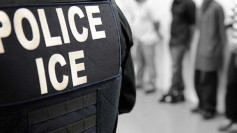
According to the Justice Department, the indictment alleges that demonstrators coordinated through messaging applications and organized blockades intended to impede Immigration and Customs Enforcement (ICE) operations around the Whipple Federal Building. Prosecutors argue the charges concern criminal conduct rather than political expression.
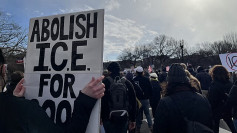
Defense supporters dispute that characterization. Reporting by Unicorn Riot, which has closely followed the proceedings, cited activists who argue the case represents an effort to suppress political dissent. One defendant, according to the outlet, said the purpose was to "quell dissent in Minneapolis." Those statements represent the defendants' position and have not been established in court.
Legal experts have long noted that conspiracy laws can encompass individuals alleged to have participated in planning or coordination even when they are not accused of directly committing violent acts. How those statutes should be applied in politically charged demonstrations remains the subject of continuing legal debate.