President Donald Trump signed two executive orders Thursday seeking to deny birthright citizenship to several narrowly defined groups, opening a new constitutional fight weeks after the Supreme Court rejected his administration's broader attempt to restrict citizenship guaranteed under the 14th Amendment.
The new measures target children born in the United States to registered foreign lobbyists, people classified by the administration as "alien enemies," members of designated foreign terrorist organizations and parents found to have fraudulently obtained tourist visas for the purpose of giving birth in the country.
Unlike Trump's earlier policy, the orders don't attempt to exclude the children of millions of undocumented immigrants broadly. Instead, the White House is advancing narrower legal theories that could test how much discretion a president has over categories of people physically present in the U.S. when their children are born.
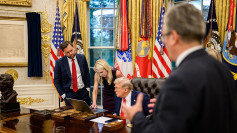
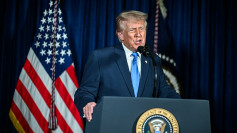
Trump presented the measures in the Oval Office alongside White House deputy chief of staff Stephen Miller, criticizing the Supreme Court ruling that derailed the administration's first approach.
Trump called that decision "very unfair" and said the country "suffers because of it."
"We're ending it a different way," Trump said.
The orders follow a June Supreme Court decision that struck down Trump's earlier effort to restrict automatic citizenship for children born to parents who were either undocumented or temporarily present in the U.S.
Writing for the court's 5-4 majority, Chief Justice John Roberts said the 14th Amendment was intended to encompass "virtually all people born on US soil," subject to historically recognized exceptions such as children born to foreign diplomats.
The ruling effectively ended Trump's sweeping first-day executive action from the beginning of his second term. Democratic-led states and immigration-rights organizations had already challenged that policy in multiple lawsuits before the Supreme Court weighed in.
The administration's new approach puts particular emphasis on so-called birth tourism.
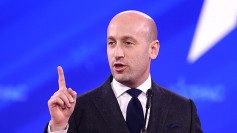
Miller argued that some foreign nationals obtain tourist visas while concealing an intention to travel to the U.S. specifically to give birth. The White House's theory is that such misrepresentation constitutes visa fraud and therefore undermines the legal basis for extending citizenship to the resulting child.
That interpretation is likely to face substantial judicial scrutiny because the constitutional citizenship question is distinct from whether a parent violated immigration or visa rules.
Amanda Frost, an immigration-law professor at the University of Virginia, said a parent's immigration violation doesn't give the president authority to deny citizenship to a child born in the United States. Her assessment suggests courts could view the administration as attempting to use immigration enforcement powers to achieve a result restricted by the 14th Amendment.
The administration also faces questions about its use of the "alien enemies" category.
David Bier of the Cato Institute argued that attempts to treat undocumented immigrants as enemies don't follow from the Supreme Court's reasoning. He noted that the justices didn't characterize illegal immigration as an "invasion" that would remove children born to undocumented parents from constitutional citizenship protections.
Even if upheld, the new policies would apply to a much smaller population than Trump's original executive order.
The available figures illustrate the difference:
- Roughly 3.6 million babies were born in the U.S. in 2024.
- Fewer than 10,000 had mothers who listed foreign addresses, according to Centers for Disease Control and Prevention figures analyzed by the Migration Policy Institute.
- Only several thousand people are registered as foreign lobbyists with the Justice Department.
- The broader undocumented population is estimated at roughly 15 million.
The foreign-address data don't establish how many births involved visa fraud or travel specifically intended to obtain U.S. citizenship for a child, leaving the actual number potentially affected by the birth-tourism provision uncertain.