The U.S. military has begun directly targeting Iranian oil tankers under a new "tanker for tanker" strategy approved by President Donald Trump, according to Axios, widening the economic dimension of the conflict as American forces struck roughly 100 Iranian targets Tuesday and Tehran responded with missiles and drones.
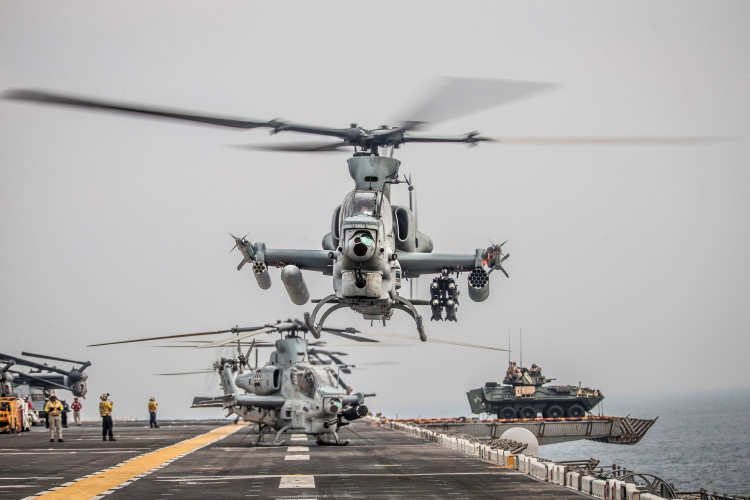
U.S. forces hit two Iranian tankers anchored off the country's coast, an American official told Axios. The vessels were positioned north of the area covered by the U.S. blockade and were among targets that also included Iranian air-defense installations, radar systems and mine-laying capabilities.
The tanker strikes represent a significant expansion of Washington's effort to pressure Iran's oil sector. Rather than relying exclusively on a blockade and financial sanctions to restrict Tehran's petroleum revenues, the new approach puts vessels themselves within the U.S. military's target set.
An official described the policy to Axios as "tanker for tanker," saying Trump had approved the strategy. The supplied report doesn't provide details about how broadly the policy will be applied, what criteria will determine which vessels are targeted or whether it extends to foreign-owned ships carrying Iranian oil.
Trump announced the broader operation on social media, linking the strikes to what he said were Iranian efforts to place new mines in the Strait of Hormuz and an Iranian missile attack directed at a U.S. military base in Jordan.
The attacks were "in retaliation for the Iranians' failed attempt at adding sea mines to the Strait, which currently has no mines (They have been completely removed or detonated!), and the Iranians shooting eight missiles, all successfully knocked down, at our Military Base in Jordan," Trump wrote.
The president accompanied the announcement with another warning against retaliation, threatening a substantially larger American response if Tehran struck back.
"If the failed Nation of Iran retaliates for this very justified attack, they will be hit again at a much harder and higher level, but it will not be the biggest attack of them all, that is waiting in the wings and, when it is over, there will be very little left of the Islamic Republic of Iran!" Trump said.
Iran nevertheless retaliated within hours. The Islamic Revolutionary Guard Corps said its forces would "tighten the lock" on the Strait of Hormuz, signaling that control of the critical energy-shipping route remains central to Tehran's response.
"Hours ago, in indiscriminate attacks born of desperation, the invading US military bombed several locations along Iran's southern coast, including several civilian sites," the IRGC said in a statement.
"The IRGC's fighters have begun a response that will make the aggressors regret their actions," it added.
American officials said the Iranian counterattack failed to inflict significant damage. Of approximately 25 ballistic missiles launched by Iran, roughly half reached Jordanian airspace, according to the U.S. account cited by Axios.
Ten missiles were intercepted and three struck the ground without causing casualties, according to the report. Iran also launched dozens of drones toward Bahrain and Kuwait, most of which were intercepted.
"The Iranians have not only lost control of the Strait of Hormuz, they have also lost control over the conflict. They got nothing today," a U.S. official told Axios.