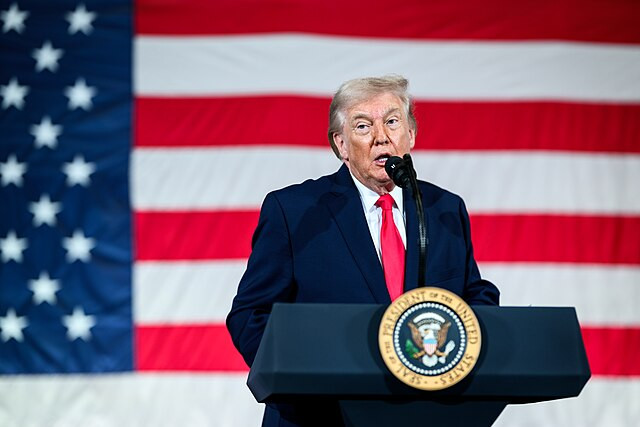
President Donald Trump's approval rating has fallen below its level ahead of the 2018 midterm elections, while Democrats hold an eight-point lead over Republicans in a new CNN poll conducted by SSRS. The September survey found that 33% of Americans approve of Trump's job performance, compared with 36% at a similar point during his first presidency.
The economic findings show an even larger difference from eight years ago. Just 27% of respondents approve of Trump's handling of the economy, down 22 percentage points from September 2018, when the issue was a relative source of support for his administration.
Democrats lead Republicans 49% to 41% among registered voters asked which party they would support in November's congressional elections. Their eight-point advantage is smaller than the 12-point lead CNN recorded in September 2018, providing a different comparison from the president's personal approval figures.
The results come as both parties prepare for the November 3 elections, which will determine control of the House and Senate. They also highlight the importance of economic conditions in the campaign, with voters expressing dissatisfaction over living costs and the broader direction of the country.
A separate measure of public opinion has shown a similar movement in Trump's approval. The Silver Bulletin polling average puts his rating at approximately 38%, down about two points since mid-July and four points since the war with Iran began in February. The difference between that figure and CNN's reading reflects their different polling methods.
The national results are accompanied by a narrower Democratic lead in competitive congressional districts. A survey commissioned by The Cook Political Report found Democrats ahead 49% to 47% across 37 House districts classified as Toss Up, Lean Republican or Lean Democrat.
Those districts voted for Trump by an average of five percentage points in 2024. Cook noted that the latest survey represented a seven-point change in the Democratic-Republican margin compared with the presidential election, although the two measurements involve different candidates and election contexts.
The battleground survey was conducted September 8-11 by Democratic polling firm New River Strategies and Republican firm GS Strategy Group. It included 1,052 likely voters and carried a margin of error of approximately three percentage points, meaning the two-point Democratic lead falls within the survey's margin of error.
Beyond preferences for either party, the Cook survey found considerable dissatisfaction with the political system. Fifty-nine percent of respondents said they favored candidates seeking substantial changes to the way the system operates, suggesting that frustration extends beyond opinions about the president.
Patrick Toomey of New River Strategies described the findings as reflecting dissatisfaction with both Trump's record and the available political alternatives.
"Voters blame Trump for making many of the country's problems worse, and they're more worried about Republicans enabling him than Democrats over-correcting in opposition," Toomey told The Cook Political Report. "But their frustration is broader and more systemic, and they're looking for something beyond either enabling Trump or simply opposing him."
The findings also reveal differences between national polling and surveys concentrated in competitive districts. CNN's eight-point Democratic advantage measures preferences among registered voters nationwide, while Cook's two-point margin reflects likely voters in a selected group of House districts.
Republicans retain a fundraising advantage through party committees and allied political organizations, while Democratic candidates have reported substantial individual fundraising. Both parties are directing resources toward competitive House and Senate races as they prepare for the final weeks of campaigning.
The CNN survey also found that 44% of respondents said their midterm vote would express opposition to Trump, compared with 19% who intended their vote as a demonstration of support for him. Those responses measure voters' stated motivations rather than their final choices in individual congressional contests.