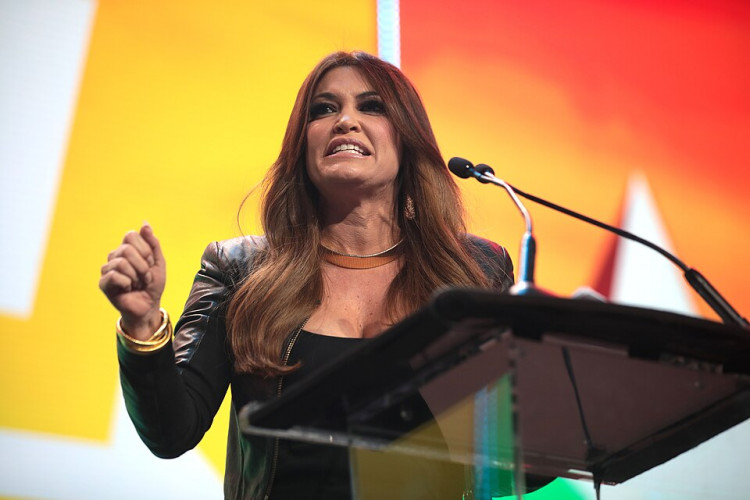
Kimberly Guilfoyle, the U.S. ambassador to Greece and former fiancée of Donald Trump Jr., reportedly suggested at a private dinner in Athens that Washington could bring down governments in other countries, making the remark while discussing the expected collapse of Romania's government.
The Wall Street Journal reported that Guilfoyle made the comment during a March gathering attended by Greek and American officials, where she became involved in a heated exchange with Greek Environment and Energy Minister Stavros Papastavrou. The account has since triggered demands for explanations from opposition politicians in Greece.
Referring to the government of Romanian Prime Minister Ilie Bolojan, which was then facing mounting political pressure, Guilfoyle allegedly told those at the dinner: "We can do that to any country we want. We can do that here."
Papastavrou reportedly objected, arguing that the United States could not replace a democratically elected Greek government. The Journal based its account on a person who attended the dinner and others who were later told about the exchange, while Guilfoyle's lawyer disputed the publication's characterization of what occurred.
The reported remark has attracted attention in part because Romania's government did fall weeks later. On May 5, Parliament approved a no-confidence motion against Bolojan's administration by 281 votes, comfortably exceeding the 233 votes required to remove the government.
There is, however, no publicly established evidence that the United States engineered that outcome. Romania's political crisis had been developing domestically, with the Social Democratic Party withdrawing from the governing coalition and joining opposition parties to back the no-confidence motion.
The vote followed disputes over austerity measures, spending cuts and economic reforms as Bolojan's government sought to reduce Romania's large budget deficit and meet commitments tied to European Union funding. Reuters reported that the collapse raised new concerns over financial stability and the country's access to billions of euros in EU money.
Social Democratic Party leader Sorin Grindeanu has separately rejected suggestions that meetings with Guilfoyle involved an arrangement over Romania's government. According to accounts cited in Romanian media, Grindeanu said discussions with the ambassador concerned energy cooperation, including the Vertical Gas Corridor, and described claims of a political deal as "pure fabrications."
The wider Journal report examined Guilfoyle's role in advancing U.S. liquefied-natural-gas exports in southeastern Europe. The Trump administration has encouraged European governments to reduce dependence on Russian energy while expanding purchases of American LNG, making Greece and the Balkans increasingly important to Washington's regional energy strategy.
Guilfoyle has promoted the Vertical Gas Corridor, an infrastructure network designed to move gas arriving in Greece northward through Bulgaria and Romania and potentially farther into Eastern Europe. The project has become one of the main channels through which U.S. officials have sought to strengthen energy ties with countries historically dependent on Russian supplies.
The Journal also scrutinized Guilfoyle's contacts with Greek construction group Aktor and Christos Marafatsos, a registered U.S. lobbyist for the company who has accompanied her to meetings with foreign officials. A U.S. Embassy official told the newspaper that Guilfoyle's official travel to Bulgaria complied fully with State Department guidance.
Guilfoyle's diplomatic appointment followed years of close ties to the Trump family. She began dating Donald Trump Jr. in 2018 and later became engaged to him before the couple separated in 2024.
President-elect Donald Trump announced Guilfoyle as his choice for ambassador to Greece in December 2024. The Senate confirmed her on Sept. 18, 2025, and she formally assumed her diplomatic role after presenting her credentials to Greek President Constantine Tassoulas on Nov. 4.