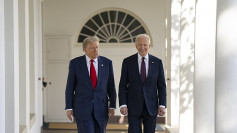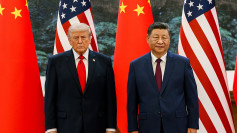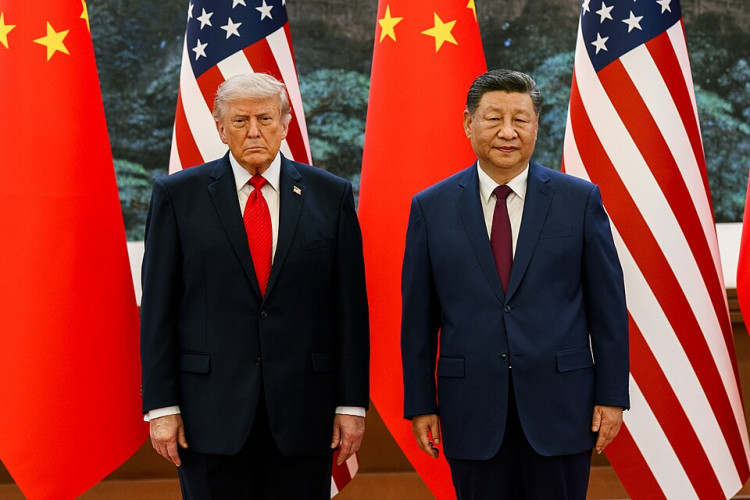
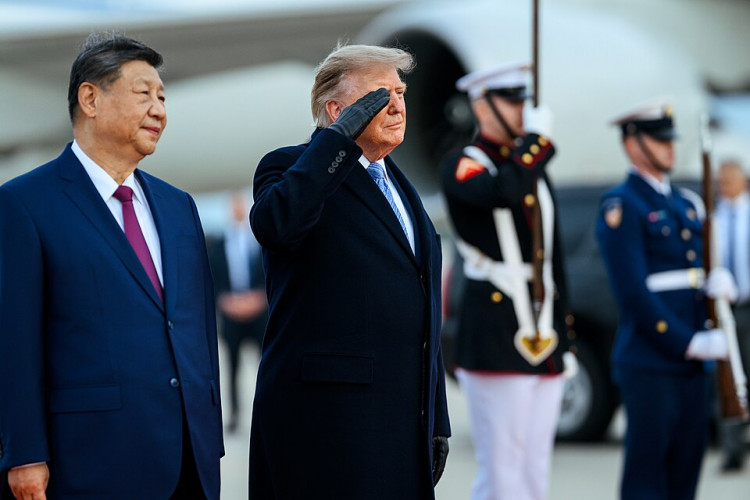
President Donald Trump's elaborate welcome for Chinese President Xi Jinping in Washington has drawn criticism from Republican lawmakers and conservative allies, exposing unease over his approach to Beijing without establishing a broader congressional break with the White House.
The three-day visit, featuring a state dinner, military flyover and red-carpet ceremonies, unsettled Republicans concerned about China's ties to Iran and its treatment of Taiwan. But objections to the reception have so far been more visible than agreement on how Congress should respond.
A separate Senate vote on Sept. 24 illustrated the limits of Republican resistance to Trump's foreign policy. A measure restricting his authority to continue military action against Iran failed 49-50, with four Republicans-Susan Collins, Rand Paul, Lisa Murkowski and Thom Tillis-joining Democrats.
That vote did not address the Xi summit or U.S. policy toward China. It nevertheless showed that, on another contested national-security issue, Republican defections were insufficient to constrain the president.
Sen. Roger Wicker of Mississippi, chairman of the Senate Armed Services Committee, was among the most prominent Republicans to question the visit. His objections followed a closed-door briefing in which administration officials told senators that China was likely deepening military cooperation with Iran, according to the supplied reporting.
"Quite frankly, had the White House asked me for advice, I would have suggested the president not invite Xi Jinping to Washington for such a lavish welcome here in the United States of America, based on all of the troubling issues we have with President Xi and the Chinese Communist Party," Wicker said in a floor speech before the summit.
Criticism also came from Trump's political orbit. Conservative activist Laura Loomer objected on X to self-described opponents of communism celebrating alongside Xi, while the House Select Committee on China released a video describing him as "the #1 adversary of the American people and our national security."
The reception included a National Archives visit to view the Constitution and Declaration of Independence. For critics, those ceremonial honors sharpened questions about what Washington gained from welcoming a leader whose government remains at odds with the U.S. on security, trade and human rights.
"They were complaining over style," said William Chou, a senior fellow at the Hudson Institute. "They were not complaining over substance, just because I think there wasn't that much substance, there were no major deliverables that came out of the meeting."
Reuters reported that the meeting produced an extension of the existing trade truce. The supplied accounts did not establish which other priorities-including export controls, agricultural purchases, artificial intelligence, Taiwan and political prisoners-were discussed or advanced.
Chou said such meetings often emphasize public appearances while working-level diplomats negotiate policy. He also pointed to the approaching U.S. midterm elections and further international meetings as reasons neither government wanted to disrupt relations.
Dan Blumenthal of the American Enterprise Institute argued in an article published Monday that Trump should apply greater economic pressure on Beijing. Trump and Xi are scheduled to meet again at the Asia-Pacific Economic Cooperation summit in November and the G20 summit in December.