Iran will "never" surrender its right to enrich uranium, a senior Iranian official told Reuters on Wednesday, rejecting a central U.S. demand after Vice President JD Vance called for concrete nuclear concessions to end the seven-month war.
The official described enrichment as a "red line" and said there had been no negotiations with Washington over Tehran's nuclear program. That position leaves a major obstacle to an agreement, even as the two governments have exchanged proposals concerning the fighting and shipping through the Strait of Hormuz.
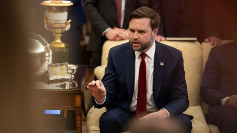
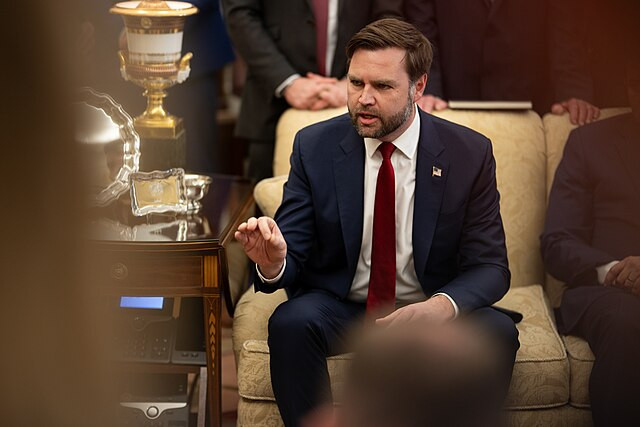
Vance told Reuters after a campaign stop in Alaska on Monday that Iran needed to demonstrate its intentions through changes to its enrichment capacity. He argued that assurances about peaceful purposes would not be sufficient.
"If you don't want a nuclear weapon, then why do you need 60% enriched fuel?" Vance said. "I think if they want to show a commitment to not building a nuclear weapon, they would do something meaningful on their enrichment capacity."
"We're not going to trade words for actions," he added.
President Donald Trump has rejected Tehran's latest proposal and warned that military operations could intensify after November's midterm elections. The conflict, costing about $3 billion a month, has become a political burden for Republicans as higher fuel prices weigh on households.
Beyond the disagreement over nuclear terms, Vance said uncertainty about decision-making in Tehran had complicated diplomacy. Following Supreme Leader Ayatollah Ali Khamenei's death in U.S.-Israeli strikes at the war's outset, American officials have dealt with President Masoud Pezeshkian and Foreign Minister Abbas Araghchi, but Vance questioned their authority.
"One of the things we picked up on is it's not totally clear how their country makes decisions," he said.
Iran disputes that account. Foreign Ministry spokesperson Esmaeil Baghaei said Sunday that U.S. officials understand the country's governing system and accused Washington of adopting "contradictory positions and mixed messaging."
Meanwhile, Secretary of State Marco Rubio argued that U.S. pressure was weakening Iran economically and reducing its ability to disrupt international commerce. Speaking in Athens on Wednesday, he described Iran's economy as being in "total and complete freefall."
"The Strait of Hormuz is open. There's almost as much oil flowing out now as there was before this conflict began," Rubio said. Vance separately acknowledged that Iranian forces had occasionally struck commercial vessels but said they had failed to halt energy shipments.
Iran's own exports face a different outlook. Kpler's head of crude oil analysis, Homayoun Falakshahi, reported that Iran loaded no oil at its export terminals in September, describing it as the first complete monthly stoppage since the 1979 Islamic revolution.
Iranian state television also reported that Oil Minister Mohsen Paknejad had tendered his resignation. Payments for previously shipped oil could continue arriving as late as December, after which Tehran could lose a longstanding source of hard currency if loadings remain suspended.
Asked whether he was leading the administration's peace effort, Vance deferred to Trump: "We're certainly involved. Ultimately, the president of the United States is driving things."