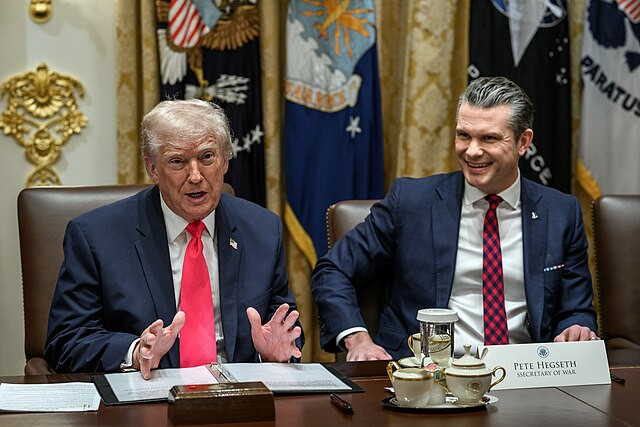
Washington is facing a political escalation as Defence Secretary Pete Hegseth becomes the subject of formal impeachment articles alleging murder, conspiracy, and mishandling of classified information-charges that strike at the legality of the administration's naval interdiction campaign and the cabinet secretary's conduct on operational messaging. Representative Shri Thanedar of Michigan filed the articles on December 4, intensifying scrutiny over lethal maritime strikes and a Pentagon inspector-general report that criticised Hegseth's use of a commercial messaging app.
The move places national-security policy at the center of a rare impeachment effort targeted at a sitting cabinet official. Thanedar's office released the text of two articles-'Murder and Conspiracy to Murder' and 'Reckless and Unlawful Mishandling of Classified Information'-arguing that Hegseth's decisions in the field and his handling of communications merit the House's intervention. In his public remarks, Thanedar reiterated that the secretary "must go," pressing the case on social media and live broadcasts.
The filings rest heavily on a September maritime operation described by critics as a "double strike" and on findings from the Department of Defense Office of Inspector General. The IG report, released between December 2 and 4, determined that senior officials used a non-DoD messaging platform, Signal, to relay operational details and failed to retain required records. According to the report, Hegseth sent information regarding aircraft quantities and strike times and declined to sit for an interview, providing written statements instead.
Pentagon officials have rejected the notion that any classified information was improperly handled, describing the episode as resolved. Yet the IG's evaluation pointed out that some of the details shared on Signal matched material contained in a classified "SECRET/NOFORN" document, noting the communication method "created a risk to operations." That discrepancy now forms a central pillar of the impeachment case, with Thanedar arguing that the secretary ignored legal obligations and endangered personnel.
The operational backdrop adds gravity to the political confrontation. Reports surrounding the September mission indicate that a follow-up strike killed survivors of the initial hit, raising questions from legal scholars about whether the individuals were hors de combat and no longer presenting a threat. While Pentagon summaries and videos describe the actions as lawful, Admiral Frank "Mitch" Bradley told congressional briefers the second strike was authorised to eliminate a continuing threat. The debate has made the operation one of the most contested episodes of Operation Southern Spear, the administration's maritime narcotics-interdiction initiative.
The pressure increased again on December 4 when U.S. Southern Command confirmed another "lethal kinetic strike" in the eastern Pacific, stating it was executed "at the direction of Secretary of War Pete Hegseth" and resulted in the deaths of four men. The explicit phrasing reinforced the secretary's direct role in operational decision-making and fueled Thanedar's argument that impeachment is the appropriate tool for reviewing Hegseth's authority.