Russia unleashed one of its largest aerial assaults of the war on Ukraine overnight into Tuesday, firing 635 drones and 38 missiles and plunging wide swaths of the country into emergency power outages, even as U.S.-hosted talks involving Donald Trump, Volodymyr Zelenskyy, and European officials fueled guarded optimism about a possible diplomatic path forward.
Ukrainian officials said the strikes killed at least four people, including a child, and injured dozens more, while damaging residential areas and critical energy infrastructure across at least 13 regions. Air raid sirens sounded nationwide, and neighboring Poland scrambled fighter jets as the scale of the bombardment raised regional security alarms.
Ukraine's air force said 587 drones and 34 missiles were shot down or suppressed, but dozens penetrated defenses, striking 21 locations. According to Ukrainian data analyzed by ABC News, the assault was the largest combined Russian strike since Dec. 6 and the third largest of the war.
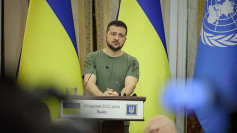
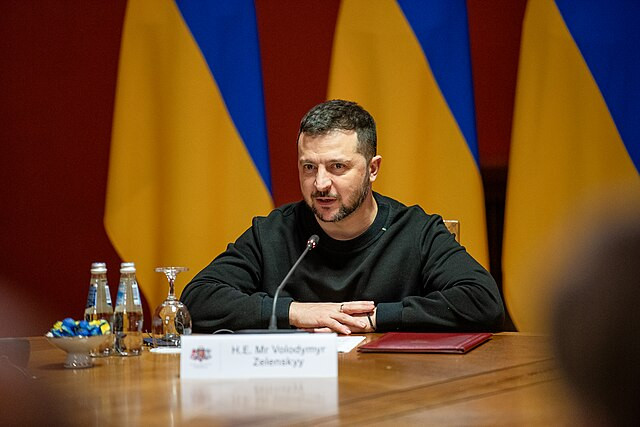
Zelenskyy said Russia was "primarily targeting our energy sector, civilian infrastructure and literally all aspects of daily life." He added that the timing of the attack "sends an extremely clear signal about Russia's priorities" as negotiations continued. "The attack comes just before Christmas, when people want to be with their families, at home, in safety," he wrote.
Ukraine's Energy Ministry said that "emergency power cuts have been introduced in a number of regions of Ukraine," adding that repairs would begin "as soon as the security situation allows." The outages followed direct hits on high-voltage substations and transmission lines that underpin the national grid.
Ukraine's Deputy Energy Minister Mykola Kolisnyk described the campaign as deliberate and strategic. "The enemy's plan is social instability through total blackout," he said. "This is not a hybrid threat. This is a military threat." He added: "Energy has become a battlefield," noting that 80% of the overnight attacks were "deliberately aimed at energy infrastructure."
The human toll was visible in cities such as Odesa, Kyiv, Zhytomyr, Khmelnytskyy and Kherson, where officials reported deaths, injuries and prolonged blackouts. In Odesa, residents emerged from days without electricity. "It's getting harder psychologically," said Olena Davydovska, 51. "Every day, this optimism somehow decreases and decreases."
The military escalation came as Ukrainian and Russian delegations returned home from U.S.-sponsored talks in Miami. Zelenskyy said discussions among U.S., Ukrainian and European officials were "quite solid and dignified," adding: "Not everything is perfect so far, but this plan is in place." He said the framework includes "security guarantees" and a "bilateral" and "legally binding" agreement with the U.S. that would require congressional review.
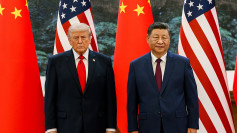
Trump told reporters at Mar-a-Lago that talks were "going OK" and that "we are talking." Vice President JD Vance said the discussions had produced a "breakthrough" in that "all the issues are actually out in the open."
Moscow publicly struck a far cooler tone. Kremlin spokesman Dmitry Peskov said, "No, of course not. It's a work in progress," when asked about progress. He later told Rossiya-1 television that Russia did not know what Vance was referring to. Russia's negotiator Kirill Dmitriev returned to Moscow to brief President Vladimir Putin, with the Kremlin saying it would assess whether developments "match the spirit of Anchorage," a reference to the Trump-Putin summit in Alaska.