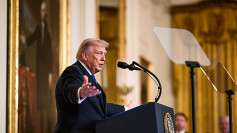
The Trump administration on Tuesday ordered U.S. citizens to leave Iran immediately, citing a rapidly deteriorating security environment marked by mass protests, sweeping security raids and a near-total communications blackout imposed by Tehran.
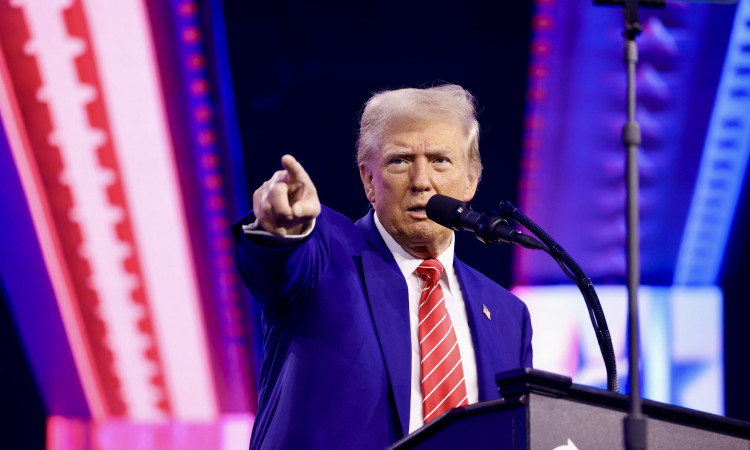
The directive, issued as Iranian authorities intensify efforts to suppress unrest nationwide, reflects mounting concern in Washington that conditions inside the country could worsen quickly. President Donald Trump has warned that military action remains possible if Iran escalates its crackdown, according to people familiar with the administration's internal deliberations.
Since Jan. 8, Iranian officials have shut down mobile networks, landlines and internet services across much of the country, isolating millions of residents from outside communication. Amnesty International condemned the blackout as an attempt to conceal abuses and warned that protesters face heightened danger without international visibility.
Reports cited by Iran International indicate that security forces have conducted door-to-door operations, confiscating satellite dishes and private surveillance equipment to identify demonstrators. Residents in Tehran said agents posing as utility workers entered homes and removed communications devices during the raids.
Human rights groups estimate the death toll has climbed sharply. Activists told ABC News that at least 544 protesters have been killed and more than 10,681 detained, with demonstrations spreading to 186 cities across all 31 provinces. The Institute for the Study of War noted that Iranian authorities have shifted their language, labeling protesters as "terrorists" rather than "rioters," a move analysts say could be used to justify further lethal force.
Trump's national security team is preparing briefings on possible responses, according to The Hill, as the president weighs options ranging from diplomacy to military action. Ilan Goldenberg, senior vice president at J Street, told the publication: "All these things matter. Do they matter enough? Nobody knows." He added that Iran's leadership is facing rare internal weakness driven by economic distress, water shortages and sustained security deployments.
Still, Goldenberg cautioned against overestimating U.S. military reach. "We do not have the capacity to do in Iran like what we did in Venezuela," he said, referring to Washington's recent operation against Nicolás Maduro. White House press secretary Karoline Leavitt said Monday: "Diplomacy is always the first option for the president," while adding that "all options remain open, including airstrikes."
Analysts say cyber and covert actions may carry lower escalation risks. Goldenberg argued that "cyberattacks going after IRGC [Islamic Revolutionary Guard Corps] capabilities would be incredibly meaningful." Writing in The Atlantic, Mark Dubowitz and Behnam Ben Taleblu said: "None of this requires occupation or nation building. It requires precision intelligence, covert action, and close cooperation between the CIA and Israel's Mossad - capabilities already proven inside Iran."
Iran has responded defiantly. Foreign Minister Abbas Araghchi told Al Jazeera that Tehran is "ready for war" if Washington pursues military options. Pro-government rallies have been staged in major cities as heavily armed units from the Revolutionary Guard Corps deploy across urban centers.
For civilians, the blackout has severed critical lifelines. Families remain unable to contact relatives abroad, businesses report collapse under communication restrictions, and detainees face arrest without witnesses. Rebecca White of Amnesty International said: "Access to the internet is a basic human right and indispensable in times of protest."