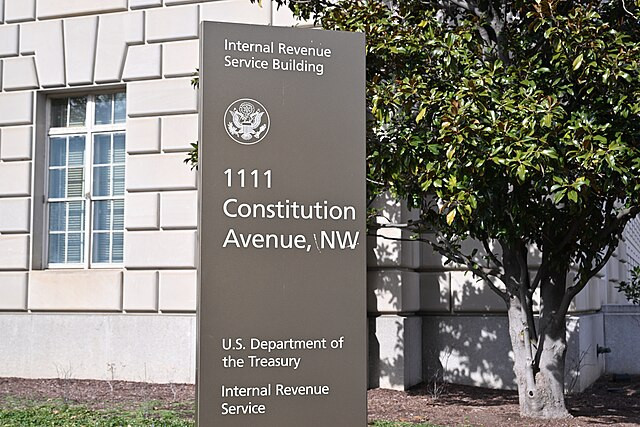
A federal judge has ruled that the Internal Revenue Service unlawfully disclosed confidential taxpayer information to Immigration and Customs Enforcement in 42,695 instances, delivering a sharp rebuke to a controversial data-sharing agreement between the Treasury Department and the Department of Homeland Security.
U.S. District Judge Colleen Kollar-Kotelly found that the IRS violated Section 6103 of the Internal Revenue Code, the statute designed to safeguard the confidentiality of taxpayer information. In her decision issued Thursday, the judge concluded the agency failed to adequately review ICE requests and disclosed private addresses and related data beyond what federal law permits.
The ruling centers on a memorandum of understanding signed last April by Treasury Secretary Scott Bessent and Homeland Security Secretary Kristi Noem, which authorized expanded information sharing to assist immigration enforcement efforts. According to court filings, ICE submitted approximately 1.28 million requests for information. Of those, the IRS provided data relating to roughly 47,000 individuals.
Judge Kollar-Kotelly determined that in 42,695 cases, the disclosures exceeded statutory limits. She described ICE's submissions as "patently deficient," finding that the IRS did not sufficiently assess whether the requests met legal standards before releasing protected data.
The case gained momentum after Dottie Romo, the IRS's chief risk officer, filed a declaration outlining the scope of the information sharing. Her filing detailed the volume of ICE inquiries and the breadth of data transmitted, raising internal compliance concerns that later formed part of the plaintiffs' arguments.
The controversy triggered institutional fallout. Shortly after the data-sharing agreement was finalized, the acting IRS commissioner resigned, according to individuals familiar with the matter. Critics had warned that linking tax records to immigration enforcement could undermine voluntary compliance, a foundation of the U.S. tax system.
Nina Olson, executive director of the Center for Taxpayer Rights, said the decision confirms the existence of an "unlawful policy." Olson and other advocates have argued that Section 6103 was enacted to create a "fortress" around taxpayer information, ensuring that individuals can file returns without fear that their data will be used for unrelated enforcement purposes.
Legal analysts say the ruling underscores the tension between national security claims and statutory privacy protections. While the government maintained that data sharing served enforcement efficiency and security objectives, the court held that administrative convenience does not override clear congressional mandates.
The broader implications extend beyond immigration policy. Tax law experts warn that erosion of confidentiality could discourage filing compliance, particularly among vulnerable populations. Section 6103 was strengthened in the 1970s after abuses involving political access to tax files, and courts have historically interpreted it strictly.
The Treasury Department and IRS have not publicly commented on the ruling. The government is expected to appeal. Two injunctions currently limit further transfers of taxpayer information to ICE and restrict use of previously shared data while litigation proceeds in the U.S. Court of Appeals.