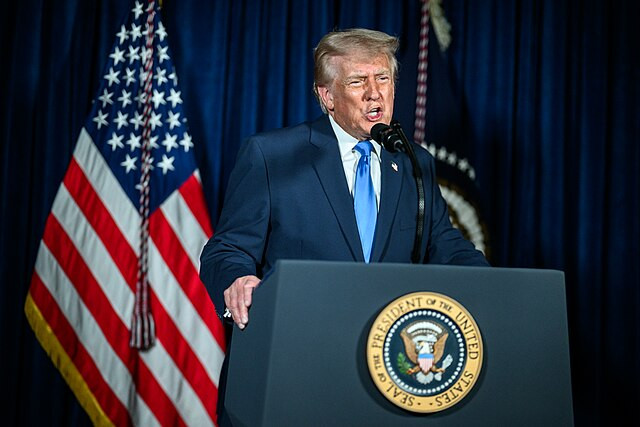
President Donald Trump said the deadly fallout from a federal immigration operation in Minneapolis prompted him to reconsider how aggressively enforcement actions are carried out, acknowledging that "maybe we could use a little bit of a softer touch," even as he insisted the administration would remain firm on deportations and border security. The remarks, delivered in an interview with NBC Nightly News, mark a notable rhetorical shift following weeks of criticism over the federal response in Minnesota.
Trump paired the comment with a warning that any moderation has limits. "You still have to be tough," he said, signaling that the core of his immigration policy remains unchanged. The president's comments come amid scrutiny of Operation Metro Surge, a large-scale federal deployment that drew thousands of immigration agents into the Twin Cities late last year.
The operation involved roughly 3,000 personnel from U.S. Immigration and Customs Enforcement and U.S. Customs and Border Protection, according to administration officials. It was designed to detain undocumented migrants, particularly those with criminal records, but quickly became a flashpoint after two fatal encounters involving federal agents.
In early January, Renee Nicole Good, a 37-year-old mother of three, was shot and killed by an ICE agent during protests against the federal presence. Weeks later, Alex Pretti, a 37-year-old intensive-care nurse, died in a separate confrontation that was captured on video and widely circulated online. The incidents triggered national protests and renewed debate over the use of force by federal immigration authorities.
Democratic leaders in Minnesota have questioned whether the president's softer language reflects a real policy change. Tim Walz and Jacob Frey welcomed a partial drawdown of federal agents but said the response fell short of restoring trust. Civil rights groups have continued to call for a full suspension of the operation and independent investigations into the shootings.
Polling conducted after the incidents suggests the administration's handling of immigration enforcement has weighed on public opinion. Surveys show a majority of Americans disapprove of how immigration laws are being enforced and say federal officials have not been transparent about the circumstances surrounding the deaths.
Republican lawmakers have also expressed concern, privately and publicly, about the optics of the operation and the strain it placed on relations with local authorities. Those concerns appear to have influenced the administration's tactical adjustments.
Under the revised approach, about 700 federal immigration officers are being withdrawn from Minnesota, though roughly 2,000 remain active. Local law enforcement agencies continue to cooperate by notifying federal officials when detainees are eligible for transfer, allowing enforcement efforts to proceed in a more targeted fashion.
White House border czar Tom Homan described the reduction as a tactical shift rather than a change in mission, emphasizing that deportations and detentions would continue. For the president, the challenge is balancing political fallout from Minneapolis with an immigration agenda long defined by uncompromising enforcement and zero-tolerance messaging.