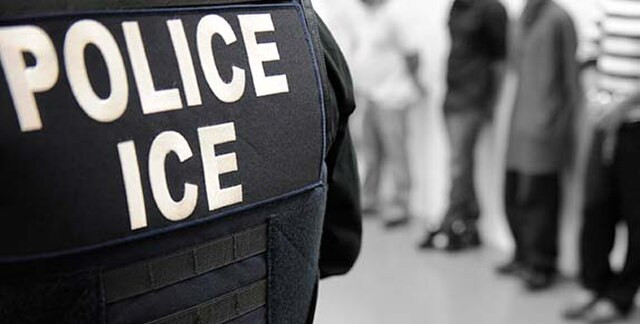
A nine-year-old Colombian girl held for 113 days at the Dilley Immigration Processing Centre in Texas wrote that U.S. immigration authorities used her as leverage to arrest her mother, adding, "ICE used me to catch my mom, and now I am in jail." The handwritten letter, obtained by investigative outlet ProPublica, has drawn renewed scrutiny to the Trump administration's expansion of family immigration detention and the treatment of children in federal custody.
The child, identified as Maria Antonia, said she was traveling on a tourist visa to visit the United States when immigration agents stopped her flight in late 2025, questioned her alone for two hours, and later transferred her to Dilley, the only U.S. immigration facility that detains entire families together. In her letter, she wrote that she fainted twice in custody, missed school, and repeatedly asked to be sent home.
Maria Antonia's detention far exceeded the limits set by the Flores Settlement Agreement, a 1997 legal framework that generally bars the government from holding migrant children for more than 20 days. ProPublica reported that dozens of children at Dilley were confined for months, citing letters collected in mid-January 2026 from detained families and removed from the facility with parental consent.
According to ProPublica's reporting, more than 750 families were being held at Dilley in early February, nearly half of them with children. The increase followed the Trump administration's decision in 2025 to resume and broaden family detention as part of a tougher immigration enforcement strategy.
Government data cited by The Washington Post showed that Immigration and Customs Enforcement booked about 3,800 minors into family detention in 2025, including children who had lived in the U.S. for years. One of them, nine-year-old Susej F. from Venezuela, wrote that she felt "bad" about how long she had been held and missed her school and friends after being detained for 50 days, despite previously living in Houston with her mother.
Other letters describe deteriorating health and limited medical care. Ender, a 12-year-old detainee, wrote that when children asked to see a doctor they were told "to drink more water," adding that "it seems like the water is what makes people sick here." Multiple letters echoed similar complaints.
The accounts contrast sharply with statements from the Department of Homeland Security, which has said detainees receive "proper medical care, three meals a day, clean water, clothing, bedding, showers, soap, and toiletries," and that children have access to teachers and educational materials. DHS has also said parents can choose deportation together or designate caregivers for their children.
Emotional distress was a recurring theme. A 14-year-old girl, Ariana V. V., wrote of constant sadness and fear, saying detention had halted her schooling and intensified anxiety about both Dilley and conditions in her home country. A seven-year-old, Mia Valentina Paz Faria, wrote of boredom and longing to return to her grandparents and friends.
Public health concerns have compounded the criticism. Advocacy groups reported outbreaks of measles and other infectious diseases inside the facility, prompting internal quarantines and the temporary suspension of legal visits while authorities sought to contain the spread.
Legal challenges have followed. An Associated Press report in late 2025 said ICE acknowledged holding roughly 400 children beyond the 20-day limit during part of the year, citing transportation and processing delays. Lawyers have argued those explanations fail to meet court-ordered protections for minors.
Maria Antonia's letter ends with a direct plea that legal advocates say reflects the experiences of many detained children: "I am not happy...please get me out of here to Colombia."