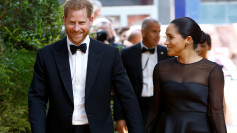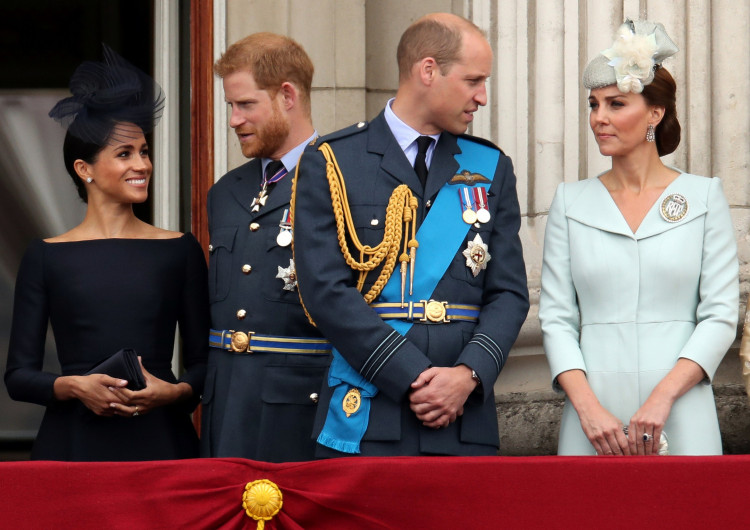
A new biography of King Charles III is reopening old divisions inside Britain's royal family, asserting that Catherine, Princess of Wales, privately believed from the outset that Meghan Markle would eventually abandon royal life-an assessment that, if accurate, reframes the collapse of the so-called "Fab Four" as less rupture than inevitability.
In Charles III: New King. New Court. The Inside Story, royal author Robert Hardman writes that Kate "always knew" Meghan would not remain within the rigid structures of the monarchy. Drawing on conversations with unnamed insiders and former palace staff, Hardman portrays early tensions at Kensington Palace as rooted not in a single clash but in temperament and institutional culture.
According to Hardman's account, Kate viewed Meghan as "abrasive, brash and bossy," describing her as "bullish" in her approach to palace life. The book suggests that aides began resigning during Meghan's tenure in what some inside royal circles allegedly referred to, with dark humor, as "the Meghan effect."
The characterization stands in stark contrast to the narrative presented by Meghan and Prince Harry in their 2021 interview with Oprah Winfrey and subsequent projects, where the Duchess of Sussex framed her experience as one marked by isolation, hostility and insufficient institutional support.
Hardman's reporting contends that Meghan's frustration centered on hierarchy. One anecdote cited in the book claims Meghan told aides that "if it wasn't going to be number one, it was just 'not a big enough role'." The implication, according to palace sources quoted by Hardman, was that the structure of the monarchy-anchored by Prince William and Kate as heirs to the throne-left little room for parallel prominence.
At the core of the dispute is the monarchy's rigid pecking order. William and Kate, as the Prince and Princess of Wales, represent the institution's future. The Sussexes, though high-profile, occupied a structurally secondary position. Hardman's narrative suggests that Kate, having spent years adapting to the monarchy's protocols, recognized that compromise and discretion were prerequisites for survival within the system.
The book leans heavily on palace perspectives, reflecting the ecosystem of aides and courtiers who have long shaped royal biographies. That dynamic has drawn scrutiny in the past, particularly as terms such as "bossy" and "abrasive" carry cultural weight when applied to Meghan, a mixed-race American actress entering a centuries-old British institution.
The broader timeline reinforces how quickly the royal experiment unraveled:
- May 2018: Harry and Meghan marry at Windsor.
- 2020: The couple steps back from senior royal duties and relocates to California.
- March 2021: The Oprah Winfrey interview airs.
- September 2022: The pair attend Queen Elizabeth II's funeral amid visible tension.
- December 2024: The formal severing of official roles is complete.
Hardman's portrayal of Kate diverges from her public image as reserved and diplomatic. He suggests a sharper political instinct-someone capable of assessing institutional compatibility early and accurately.
The biography arrives at a moment when both women occupy markedly different roles. Kate has resumed limited public engagements following major abdominal surgery, reinforcing her image as future queen. Meghan and Harry have repositioned themselves in California as media producers and philanthropic advocates.
Whether Hardman's account reflects objective hindsight or palace-aligned revisionism, it underscores a structural truth: the monarchy rewards endurance and discretion. Meghan's supporters argue that she challenged an outdated system; critics contend she underestimated its inflexibility.