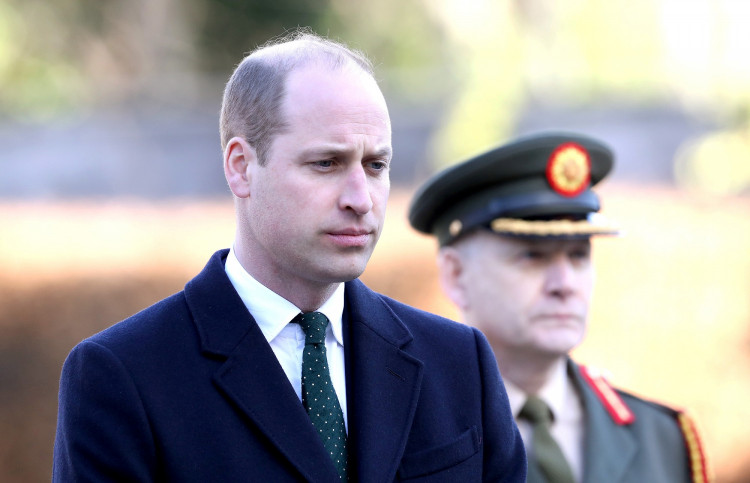
Prince William acknowledged personal strain in his first public appearance since the arrest of Prince Andrew, telling attendees at the 2026 British Academy Film Awards in London that he is "not in a calm state" as the monarchy confronts one of its most testing moments in recent years.
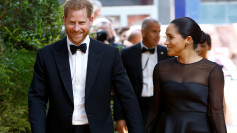
The Prince of Wales and Catherine, Princess of Wales, attended the ceremony at the Royal Festival Hall in William's capacity as President of BAFTA, a role that places him at the center of one of Britain's most visible cultural events. The appearance came just days after Andrew was arrested on suspicion of misconduct in public office, an investigation that has intensified scrutiny of the royal household.
While speaking informally with guests during the evening, William was asked whether he had seen the historical drama Hamnet, which later won the BAFTA for Outstanding British Film. His answer was unusually candid for a senior royal navigating controversy.
"I need to be in quite a calm state, and I am not at the moment," he said, adding that he intended to watch it later.
The remark, brief and understated, stood out precisely because of its restraint. Senior members of the Royal Family seldom allude directly to emotional pressure, particularly when legal matters involving close relatives are unfolding.
Andrew's arrest occurred on 19 February, coinciding with his 66th birthday. Police confirmed searches at Royal Lodge in Windsor as part of the inquiry, ensuring sustained domestic and international media attention. Under British protocol, senior royals do not comment on active investigations, and William did not address the case itself.
Despite the backdrop, the Prince of Wales proceeded with official duties. He presented the BAFTA Fellowship, one of the academy's highest honors, maintaining ceremonial composure before a global audience.
The Princess of Wales offered lighter remarks during the evening, telling guests she had watched Hamnet the previous night and found it moving. The couple's contrasting tones-her conversational warmth and his measured candor-reflected an effort to balance continuity with authenticity.
The monarchy's position remains constitutionally distinct from government, yet public perception carries tangible weight. William, first in line to the throne after King Charles III, represents the institution's future leadership. His acknowledgment of strain may resonate with a public increasingly attentive to transparency and accountability.
In modern Britain, moments of informality can shape broader narratives about the royal family's resilience. William's statement did not elaborate on internal deliberations or legal implications. Instead, it offered a glimpse of human tension behind ceremonial roles at a time when the institution's stability is being closely watched.