President Donald Trump has pointed to the passage of several oil supertankers through the Strait of Hormuz as evidence of progress in the Iran conflict, describing the development as a "present" from Tehran even as Iranian officials deny any such concession and reject claims of ongoing negotiations.
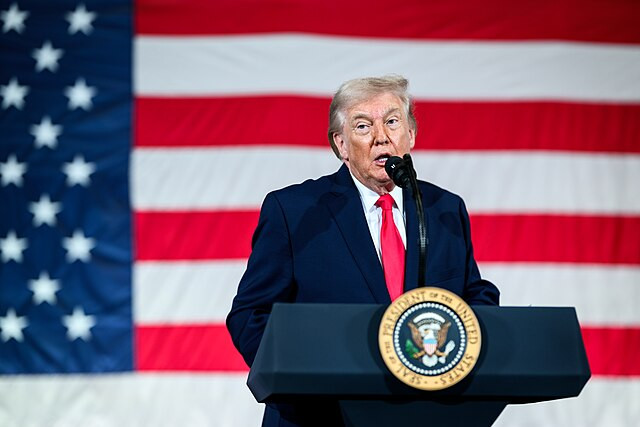
Speaking during recent remarks, Trump said Iran had allowed the United States access to "big boats of oil," framing the movement of vessels through the contested waterway as both a symbolic and economic breakthrough. "They're letting us have big boats of oil," he said, adding that the shipments represented a "tremendous amount of money."
The comments come amid heightened tensions involving Iran and the United States, with the strategically critical Strait of Hormuz-through which roughly one-fifth of global oil supply typically flows-remaining under tight control as military activity continues in the region.
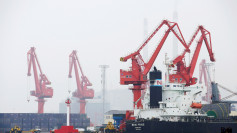
Market participants and analysts have focused closely on reports that between eight and ten tankers were permitted to transit the strait in recent days, a rare development after weeks of near-total disruption. Oil supertankers can carry millions of barrels of crude, making even a limited number of crossings significant for global supply expectations.
The characterization of those movements, however, has become a point of dispute. Iranian officials have publicly rejected the notion that oil was transferred to the United States or that the passage constituted a concession tied to negotiations.
Instead, Tehran has maintained that access to the strait is being selectively managed. Officials have indicated that only vessels deemed "non-hostile" or operating under coordinated arrangements are being allowed through, reinforcing Iran's leverage over a chokepoint central to global energy markets.
The distinction between ownership and transit has become central to the debate. The tankers in question were not described as U.S.-owned shipments, with reports indicating that some vessels were operating under foreign flags, including Pakistani registration.
Even so, the movement of a limited number of tankers has had measurable implications for market sentiment. Oil prices, which had surged above $100 per barrel amid escalating conflict, have shown sensitivity to any signal that flows through Hormuz could partially resume.
Analysts view the development as a calibrated signal rather than a structural shift. Allowing select shipments to proceed enables Iran to demonstrate operational control over the waterway while avoiding broader de-escalation commitments such as sanctions relief or military concessions.