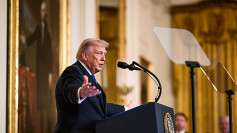
Donald Trump intensified tensions with Iran over its nuclear programme after warning that the United States would "blow them up" if anyone attempted to move or access Tehran's enriched uranium stockpile, injecting new volatility into already fragile diplomatic negotiations between Washington and Tehran.
The remarks, delivered during an interview on "Full Measure with Sharyl Attkisson," underscored the increasingly confrontational tone surrounding Iran's nuclear ambitions months after military strikes and regional clashes pushed the Middle East closer to broader conflict.
Trump said the U.S. was maintaining constant surveillance over Iran's nuclear infrastructure through military and intelligence systems tied to the United States Space Force.
"We'll get that at some point... We have it surveilled," Trump said. "I did a thing called Space Force, and they are watching that... If anybody got near the place, we will know about it - and we'll blow them up."
The president went further, describing what he claimed was the sophistication of American monitoring capabilities. "If somebody walked in, they (Space Force) can tell you his name, address, his badge number," Trump said.
The comments immediately reverberated through diplomatic and security circles as negotiators from the U.S. and Iran continue indirect talks aimed at preventing a renewed nuclear crisis. While discussions have reportedly continued behind closed doors, major disputes remain unresolved, particularly over Iran's uranium enrichment programme and the future of its existing stockpile.
Western intelligence agencies and international watchdogs believe Iran still possesses significant quantities of highly enriched uranium despite coordinated U.S. and Israeli strikes on nuclear-related facilities earlier this year. Analysts have warned that, if further refined, the material could theoretically support the development of multiple nuclear weapons, although inspectors from the International Atomic Energy Agency have repeatedly stated there is currently no verified evidence Tehran is actively building a bomb.
The confrontation traces back to Trump's 2018 withdrawal from the Joint Comprehensive Plan of Action, the multinational nuclear accord negotiated under former President Barack Obama. Following the U.S. exit from the agreement, Iran gradually expanded enrichment activities while relations with Washington deteriorated sharply.
Trump has consistently argued that Tehran "can never have a nuclear weapon," making the dismantling or surrender of enriched uranium a central demand in any future agreement. Iranian officials, meanwhile, have insisted the country's nuclear programme remains peaceful and have rejected calls to abandon domestic enrichment entirely.
Benjamin Netanyahu has also publicly emphasized the strategic importance of preventing Iran from retaining enriched uranium, though Israeli officials have remained deliberately vague about whether additional military operations are under consideration.
Trump's latest warning arrives at a particularly sensitive moment for regional diplomacy. Ceasefire discussions tied to earlier U.S.-Iran confrontations remain unstable, while energy markets continue reacting nervously to the risk of disruption around the Strait of Hormuz, a vital shipping route for global oil supplies.
International observers warned that the president's rhetoric could complicate ongoing negotiations by hardening positions inside Tehran. European diplomats involved in previous nuclear discussions have privately expressed concern that public threats of force could weaken moderates within Iran who favor renewed diplomacy.
At the same time, Trump's supporters argue the aggressive language reflects a strategy of deterrence rather than preparation for immediate military action. Administration allies have repeatedly defended his approach as necessary to prevent Iran from exploiting drawn-out negotiations while advancing enrichment capabilities.
The interview also reinforced Trump's broader foreign-policy message that overwhelming military pressure remains central to his approach in the Middle East. During the conversation, he argued Iran was currently incapable of confronting the United States militarily because "they have no anti-aircraft weaponry, no leaders."