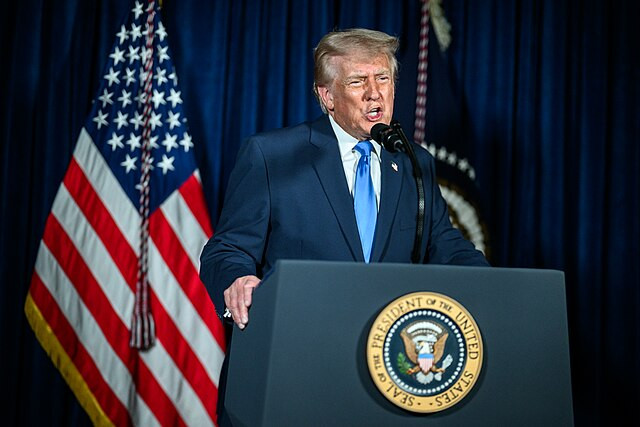
Donald Trump is facing renewed scrutiny over his conduct and health after a series of social media posts-mocking Bruce Springsteen's appearance-coincided with warnings from former White House press secretary Stephanie Grisham that the president is "clearly not well," intensifying debate in Washington over leadership stability.
The controversy began with posts in which Trump criticized Springsteen's appearance, suggesting the musician had undergone plastic surgery. The remarks, widely circulated online, were quickly labeled by critics as "bizarre" and ill-timed, given escalating geopolitical tensions and domestic political pressures.
The backlash deepened as Trump followed the posts with additional commentary on military threats and global developments, prompting observers to question the coherence of his messaging. Some analysts described the sequence as erratic, noting a shift from personal attacks to high-stakes foreign policy rhetoric within hours.
Grisham, who served as press secretary during Trump's first administration, amplified those concerns with a public statement that drew immediate attention in political circles. "This is not just Trump being Trump, and you all know it," she wrote, adding that the president was "clearly not well."
Her remarks represent one of the most direct public challenges from a former senior aide regarding Trump's condition. Grisham also suggested that the issue extends beyond political style, raising questions about whether there is adequate oversight of presidential decision-making.
The comments have reignited a broader debate in Washington over presidential health and transparency. While there has been no official medical update addressing the claims, the absence of clarification has allowed speculation to intensify across media and political channels.
Additional commentary from figures such as Tucker Carlson has further fueled discussion. Carlson suggested that Trump's recent behavior could indicate diminished control over decision-making, adding another dimension to an already polarized narrative.
Supporters of the president have pushed back, arguing that his communication style has long been unconventional and that critics are interpreting familiar patterns as signs of decline. They contend that the focus on his posts distracts from substantive policy issues and ongoing diplomatic challenges.
Still, the timing of the controversy has raised stakes. The posts emerged amid heightened global tensions and ongoing U.S. foreign policy challenges, amplifying concerns about consistency and tone at the highest levels of government.
Within political circles, reactions have diverged sharply:
- Critics argue the combination of erratic messaging and insider warnings raises legitimate concerns about judgment and capacity.
- Allies maintain that Trump's approach reflects his long-standing communication strategy rather than any underlying issue.
The White House has not issued a detailed response to Grisham's remarks, instead continuing to defend the president's leadership and public messaging. Trump, for his part, has maintained a confident posture in public appearances, offering no indication that he intends to address the claims directly.