Ghislaine Maxwell's legal team has publicly floated the prospect of a presidential pardon from Donald Trump, even as no formal request has been filed and the White House maintains that clemency is not under consideration, underscoring the unusual dynamic surrounding one of the most scrutinized criminal cases in recent U.S. history.
In an interview with Politico published April 17, defense attorney David Oscar Markus said there is "a good chance" Maxwell could receive a pardon, while acknowledging that the legal team has not yet approached the administration. "I don't know what the percentages are," Markus said. "There's a good chance and for good reason that she would get a pardon."
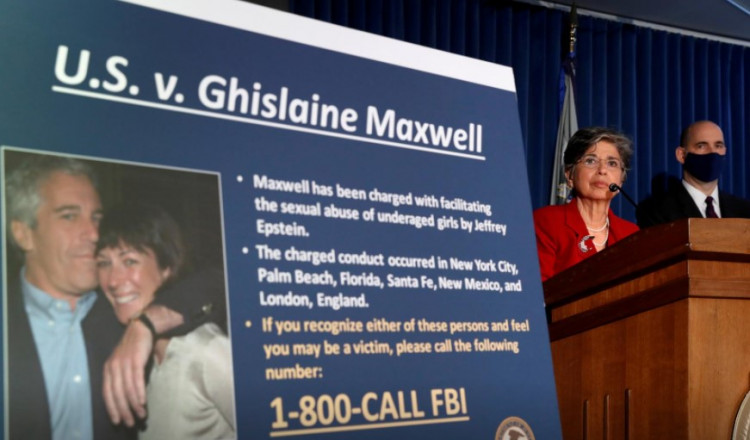
Maxwell, who is serving a 20-year sentence at a federal prison camp in Texas following her 2021 conviction on sex trafficking-related charges tied to the late Jeffrey Epstein, remains at the center of ongoing legal and political developments. Her case intersects with a pending habeas petition in Manhattan federal court and an active investigation by the House Oversight Committee into Epstein-related materials.
Markus framed his approach as a matter of timing, noting that the current environment may not be conducive to a formal request. He said he does not believe "now is the best time to do it, with everything going on," referencing heightened scrutiny of the Epstein case and broader political sensitivities.
The attorney also challenged the prosecution narrative that led to Maxwell's conviction. He argued she "would never have been prosecuted had Jeffrey Epstein not committed suicide, or whatever, however he died," a claim that runs counter to federal prosecutors' longstanding position that Maxwell was a central participant in the trafficking scheme, a conclusion upheld at trial and on appeal.
Markus has also linked the possibility of clemency to broader public interest claims. During a February 2026 deposition before the House Oversight Committee, he stated: "Both President Trump and President Clinton are innocent of any wrongdoing. Ms. Maxwell alone can explain why, and the public is entitled to hear that explanation." He has suggested that a pardon could facilitate fuller testimony from his client.
The White House has sought to temper speculation. Press Secretary Karoline Leavitt said earlier this year that granting clemency to Maxwell is "not something" Trump is "considering or thinking about." The administration has otherwise pointed to Trump's prior remarks in 2025, when he said he would "have to take a look at it" but also indicated limited familiarity with any request.
Maxwell's legal posture remains active on multiple fronts. She invoked her Fifth Amendment rights repeatedly during her February deposition, declining to answer questions about victims or alleged co-conspirators. Prior to that appearance, Markus wrote to lawmakers that "if Ms. Maxwell were to receive clemency, she would be willing and eager to testify openly and honestly, in public, before Congress in Washington, D.C."
The clemency discussion has drawn bipartisan skepticism. Representative Suhas Subramanyam said, "Ghislaine Maxwell should have no hope of ever getting out of prison," while Committee Chairman James Comer also discouraged any pardon consideration, reflecting divisions even within Republican ranks.
Legal barriers remain significant. Maxwell's conviction was affirmed by the U.S. Court of Appeals for the Second Circuit in 2024, and the Supreme Court declined to hear her appeal in 2025. Any pardon would override the outcome of a jury trial, appellate review, and federal sentencing, placing the decision squarely in the realm of executive discretion.