Donald Trump has ordered a sweeping recalibration of U.S. drug policy in Washington, directing federal agencies to accelerate research into psychedelic therapies and to reclassify medical marijuana, marking a significant departure from decades of Republican "war on drugs" orthodoxy rooted in the War on Drugs.
The policy shift, formalized through a new executive order and follow-up actions by the Justice Department, reflects growing bipartisan interest in the medical potential of substances long categorized as high-risk and tightly restricted. While the changes stop short of legalization, they introduce new regulatory momentum that could reshape how certain drugs are studied and prescribed in clinical settings.
At the center of the initiative is an order to loosen federal barriers on psychedelic research, paired with $50 million in funding to support state-level programs and expanded clinical trials. The directive also instructs the Food and Drug Administration to expedite review processes for therapies targeting conditions such as depression, post-traumatic stress disorder and substance use disorders.
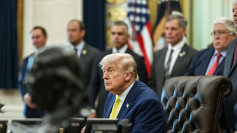
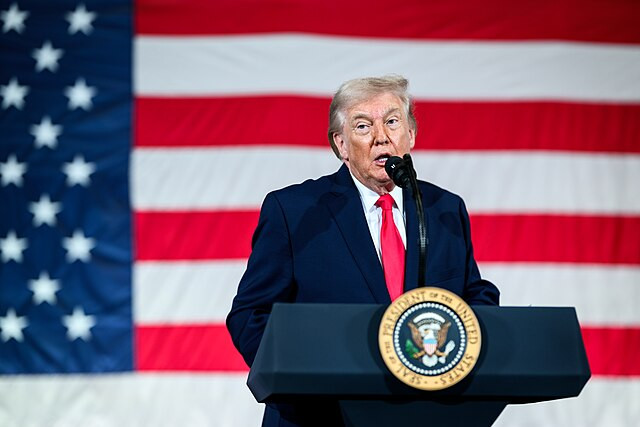
During the Oval Office announcement, Trump signaled a more informal tone around the issue, reportedly remarking, "Can I have some please?" as psychedelics were discussed among policymakers, veterans and media figures in attendance. The comment underscored a cultural shift from earlier eras of strict prohibition toward a more exploratory framework.
Days later, acting Attorney General Todd Blanche moved to reclassify state-licensed medical marijuana under federal law, describing the effort as aligned with healthcare priorities. The Justice Department said it was "delivering on President Trump's promise to expand Americans' access to medical treatment options."
Although cannabis remains federally illegal for recreational use and psychedelics are still banned outside approved research settings, the combined measures represent a structural pivot. The administration's approach emphasizes medicalization and scientific validation rather than enforcement alone.
Advocates say the change reflects a coalition that has expanded beyond traditional partisan lines. Bryan Hubbard, chief executive of Americans for Ibogaine, said, "Regardless of what one may think of the president ... he seems to be someone who is open to innovation and is not imprisoned by dogmatic viewpoints." He added that veterans have played a key role in reframing the debate.
"The warfighter messengers around psychedelics are able to eventually reverse the stigma that has long been associated with the countercultural left," Hubbard said. "They have been able to demonstrate, hey, it's real, it's legitimate, and it's to be taken seriously."
Lawmakers including Rep. Morgan Luttrell, a former Navy SEAL, have backed expanded research, joining bipartisan efforts to push for "rigorous and urgent clinical research" into psychedelic therapies. The involvement of military veterans has been cited by supporters as instrumental in shifting conservative perspectives on treatment alternatives for trauma-related conditions.
Critics within the Republican Party have voiced concern over the pace and direction of the changes. Anne Schlafly Cori, chair of the Eagle Forum, said, "Trump is famous for not doing anything more than Diet Coke, so all I can think of is that he doesn't realize the dangers that he is unleashing." Senator Tom Cotton warned that modern marijuana is "much more potent than just ten or twenty years ago" and linked it to "increased psychosis, anti-social behavior, and fatal car crashes," calling the policy "a step in the wrong direction."