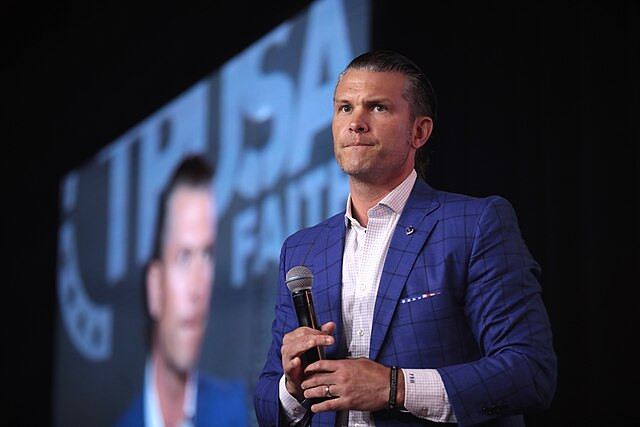
Pete Hegseth is facing growing resistance from Republican lawmakers in Washington, with multiple senators warning that recent leadership changes at the Department of Defense risk destabilizing the Pentagon during an ongoing conflict with Iran.
The criticism follows a series of high-profile departures, including the dismissal of Gen. Randy George and the removal of John Phelan, moves that lawmakers say were executed with little notice to Congress. The developments have prompted concerns among GOP defense hawks that institutional experience is being rapidly depleted.
One Republican senator, speaking anonymously to The Hill, described the situation as a "hollowing out of incredible leadership at the Pentagon," adding that tensions "came to a tipping point when Gen. George was dismissed." Several lawmakers indicated privately that Hegseth would face a far more difficult confirmation process if nominated today.
Public criticism has also intensified. Joni Ernst, a senior member of the Senate Armed Services Committee, said she had "the greatest admiration and respect for Gen. Randy George," calling him "one of the finest officers the United States Army has ever produced," and concluding that it was "a mistake for Secretary Hegseth to dismiss him."
Other senators have raised procedural concerns about how decisions were made. Lawmakers noted that George's removal occurred while key civilian leaders, including Army Secretary Dan Driscoll, were not present in Washington. Driscoll later told a House panel that the general's departure was "a real loss to us."
Mike Rounds said he was caught by "surprise" when Phelan was fired, noting that the Navy secretary had been actively engaging with lawmakers on defense legislation prior to his removal. The lack of advance consultation has added to broader unease on Capitol Hill.
The turnover extends beyond those cases. Hegseth has also removed or replaced several senior military figures, including Gen. C.Q. Brown and Adm. Lisa Franchetti, prompting fears that additional departures could follow.
Questions about Hegseth's management style have resurfaced alongside the personnel changes. Thom Tillis, who supported Hegseth's confirmation, said the defense secretary had previously overseen only "30 or 40 people" and now faces an organization "much larger, much more complex than anything he's done." Tillis added that Hegseth was making "less-than-ideal personnel decisions" and said there was "no question he's got a failing grade."
The criticism has extended into policy decisions as well. Roger Wicker described the Pentagon's move to end annual flu vaccine requirements for service members as "a mistake," highlighting broader concerns about judgment and priorities within the department.
The Pentagon has defended its actions. Chief spokesman Sean Parnell said officials "serve at the pleasure of the President" and argued that leadership changes are necessary to align with administration goals. He stated that "necessary changes have been made and will continue to be made," emphasizing the difficulty of reforming a department of such scale.
Despite the internal turbulence, lawmakers from both parties have continued to praise the performance of U.S. forces engaged in operations abroad. Still, the disconnect between battlefield execution and leadership instability has sharpened political scrutiny.
Lisa Murkowski said she was "shocked" by George's removal and noted that "people are wondering what's going on over there." She added that with the United States "in the middle of a war," lawmakers need confidence "that things are being managed" effectively.