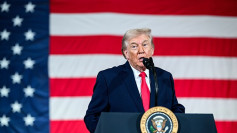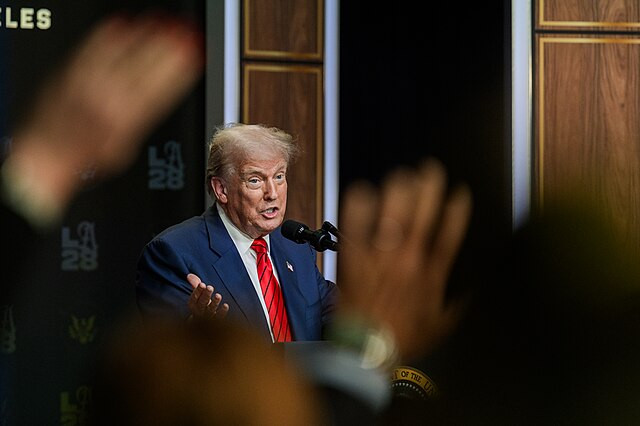
Donald Trump has escalated a constitutional confrontation over birthright citizenship as the U.S. Supreme Court prepares to weigh his administration's effort to reinterpret the Fourteenth Amendment to the United States Constitution, a move that could reshape long-standing definitions of American identity and immigration law.
At the center of the dispute is a 2025 executive order signed on Trump's first day back in office, aimed at ending automatic citizenship for children born in the United States to undocumented parents. The case, widely referred to as Trump v. Barbara, challenges more than a century of legal precedent rooted in the principle of jus soli, or citizenship by birthplace.
The administration has argued that the amendment's language-granting citizenship to those "born or naturalised in the United States, and subject to its jurisdiction"-has been wrongly interpreted for decades. Trump has framed the issue through the lens of what he calls "birth tourism," contending that the clause was never intended to apply to children of noncitizens without permanent ties to the country.
That argument directly confronts the Supreme Court's 1898 ruling in United States v. Wong Kim Ark, which established that nearly all individuals born on U.S. soil are citizens regardless of parental status. Legal scholars have long treated the decision as definitive, anchoring modern interpretations of the 14th Amendment.
Solicitor General D. John Sauer reinforced the administration's position before the court, citing immigration pressures and the alleged misuse of citizenship rules. He described "birth tourism" as a justification for revisiting constitutional interpretation, placing political rhetoric at the center of a legal debate traditionally grounded in precedent and textual analysis.
The stakes extend beyond the courtroom. More than three million people apply annually for immigration status adjustments in the United States, and the outcome of the case could redefine eligibility for citizenship at birth, altering the legal status of future generations.
Legal analysts note that the administration's approach seeks to shift the basis of citizenship from geography to legal affiliation, aligning more closely with jus sanguinis, or citizenship by parentage. That transition would mark a significant departure from Anglo-American legal traditions that historically emphasized birthplace.
Comparative examples underscore the potential implications. Countries such as New Zealand once followed a broad jus soli framework but shifted in 2005 to restrict automatic citizenship based on parental status, creating a hybrid system. That change has left some residents born in the country without guaranteed citizenship rights, illustrating how policy shifts can reverberate across generations.
The debate has also drawn attention to broader global trends, as governments increasingly tighten definitions of citizenship and residency. In New Zealand, legislative proposals such as the Immigration (Enhanced Risk Management) Amendment Bill and findings from the Waitangi Tribunal have highlighted tensions between legal status and deeper notions of belonging tied to ancestry and community.
Within the United States, the administration's framing of birthright citizenship as a policy vulnerability has resonated politically, even as critics argue it risks undermining a foundational constitutional principle. Economists and policy analysts warn that narrowing citizenship eligibility could carry long-term demographic and fiscal consequences, potentially affecting labor supply and tax revenues.