President Donald Trump has unveiled a new counterterrorism strategy that dramatically reshapes the federal government's definition of domestic extremism, elevating what the administration describes as "violent secular political groups" and "radically pro-transgender" movements into central national security concerns alongside Islamist terrorism and drug cartels.
The 16-page strategy document, released by the White House on Wednesday, represents one of the clearest ideological breaks yet from the domestic security priorities of former President Joe Biden. Under Biden, federal agencies repeatedly identified white supremacist violence and far-right extremism as the nation's most pressing domestic terrorism threats. Trump's framework instead shifts attention toward antifa-linked activism, anarchist networks and violence tied to gender identity debates.
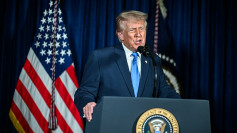
"Our counterterrorism activities will also prioritise the rapid identification of violent secular political groups whose ideology is anti-American, radically pro-transgender and anarchist," Trump wrote in the strategy document.
The administration's language immediately drew criticism from civil liberties groups and counterterrorism analysts, who argued that the document risks blurring the line between criminal violence and political or cultural identity. Critics also questioned whether the strategy selectively emphasizes isolated incidents involving left-wing actors while downplaying years of data showing higher death tolls linked to far-right violence.
Sebastian Gorka sharpened the administration's rhetoric during a briefing with reporters, explicitly linking transgender-related debates to acts of political violence.
"Americans have witnessed politically motivated killings of Christians and conservatives increase," Gorka said, while naming "antifa" and what he described as "transgender killers" among the threats the administration intends to confront. "We see a threat, we will respond to it, and we will crush it."
The strategy places antifa at the center of federal domestic security policy in a way previous administrations avoided. While law enforcement agencies have long noted that antifa lacks a centralized national command structure, Trump formally designated antifa a domestic terrorist organization in September, escalating a years-long political campaign against far-left protest movements.
Federal prosecutors have already begun pursuing terrorism-related cases tied to the designation. In March, eight individuals alleged to have links to antifa were convicted on terrorism charges connected to a shooting at a Texas immigration facility. Legal analysts noted the case marked one of the first known uses of material-support terrorism statutes involving alleged antifa associates inside the United States.
The White House argues the new framework reflects changing realities in domestic political violence. Officials pointed to research from the Center for Strategic and International Studies showing an increase in left-wing extremist incidents over the past decade.
According to CSIS data cited by the administration:
- Left-wing extremist attacks and plots accounted for roughly 2% of incidents in 2015.
- By 2025, that figure had risen to 42%.
- Researchers recorded five left-wing attacks in 2025, compared with one linked to right-wing extremists and two associated with jihadist violence.
At the same time, the broader historical data in the same report complicates the administration's narrative. Over the past decade, CSIS found right-wing extremists were responsible for 152 attacks resulting in 112 deaths. Left-wing extremists were linked to 35 attacks and 13 deaths, while Islamist attacks caused 82 deaths.
The omission of those longer-term trends from the administration's messaging drew immediate backlash from terrorism scholars. Matthew Levitt criticized the strategy online, writing that failing to recognize right-wing terrorism as a major issue was "just whacky."
Civil liberties advocates also warned the language surrounding transgender identity could deepen political polarization around LGBT issues. Rebekah Jones accused the administration of turning anti-fascist activism itself into a target of federal policing.
"If you're against fascism, you're now a terrorist in the eyes of the Trump regime," Jones wrote online.
The strategy also expands beyond domestic groups. The U.S. State Department recently designated four far-left European organizations as terrorist entities, including movements operating in Greece, Germany and Italy. Those designations allow U.S. authorities to freeze assets, conduct expanded surveillance and pursue terrorism-related prosecutions connected to the organizations.