President Donald Trump sought to calm fears over a deadly hantavirus outbreak aboard the MV Hondius on Thursday, telling reporters the situation "should be fine," even as scientists and public health experts pointed to the Trump administration's earlier decision to cut federal funding for research into the virus now spreading across multiple countries.
The outbreak aboard the Dutch-flagged expedition vessel has already killed three people and infected at least eight passengers and crew, according to international health officials. Five cases have been confirmed as the Andes strain of hantavirus, a rare but potentially fatal pathogen associated with rodent exposure in parts of South America.
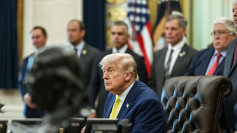
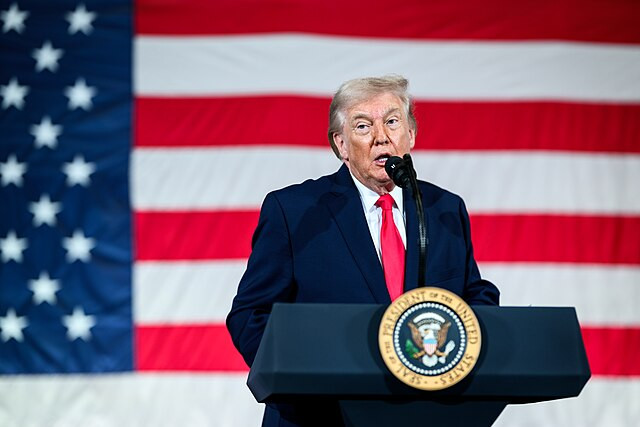
"It's very much, we hope, under control," Trump said during remarks at the White House. "We have a lot of people. It's a lot of great people are studying it. It should be fine."
The comments came as health authorities across Europe, South America and the United States began tracing passengers who had already left the vessel before the outbreak was fully identified. Roughly 30 travelers disembarked earlier at Saint Helena in the South Atlantic, while former passengers from California, Arizona, Texas, Georgia and Virginia are now being monitored by state health departments.
The MV Hondius departed Ushuaia, Argentina, on April 1 and remains en route to Spain's Canary Islands with 146 passengers and crew from 23 countries still aboard, including 17 Americans.
The political controversy surrounding the outbreak intensified after renewed attention fell on the National Institutes of Health's 2025 decision to halt a federal research initiative studying hantavirus transmission between rodents and humans. The program operated under the Centers for Research in Emerging Infectious Diseases, or CREID, a global network launched in 2020 with projected funding of $82 million.
The NIH issued a stop-work order last year, describing the research as "unsafe for Americans and not a good use of taxpayer funding." Scientists involved in the program strongly disputed that assessment.
Scott Weaver, former principal investigator for the CREID network and professor at the University of Texas Medical Branch, told Scientific American: "We're not in a good position to say [hantavirus], just because it's never caused big outbreaks, doesn't have the potential to do that one day."
According to Weaver, approximately $100,000 from the program had been allocated for hantavirus field research in Argentina, where the Andes virus is endemic. Researchers said the broader CREID network had already improved outbreak detection systems for diseases including dengue fever before the funding was terminated.
The World Health Organization moved Thursday to reassure the public while acknowledging the seriousness of the outbreak. WHO Director-General Tedros Adhanom Ghebreyesus described the situation as "serious" but emphasized that the overall public health threat remains limited because the Andes strain does not appear to spread efficiently between people.
"Our priorities are to ensure the affected patients receive care, that the remaining passengers on the ship are kept safe and treated with dignity, and to prevent any further spread of the virus," Tedros said during a press conference on May 7.
Health agencies are nevertheless confronting a difficult logistical challenge. Passengers from the cruise have already dispersed across multiple continents, reviving memories among some epidemiologists of the fragmented international response during the early weeks of COVID-19.
Dutch health authorities also confirmed Thursday that a flight attendant in the Netherlands who had contact with passengers from the voyage is now being tested for hantavirus infection.
Medical experts stressed that the cancelled NIH project would not necessarily have prevented the Hondius outbreak itself. But they argue the reduction in virus-surveillance infrastructure leaves governments less prepared to detect and model emerging zoonotic diseases before they spread internationally.