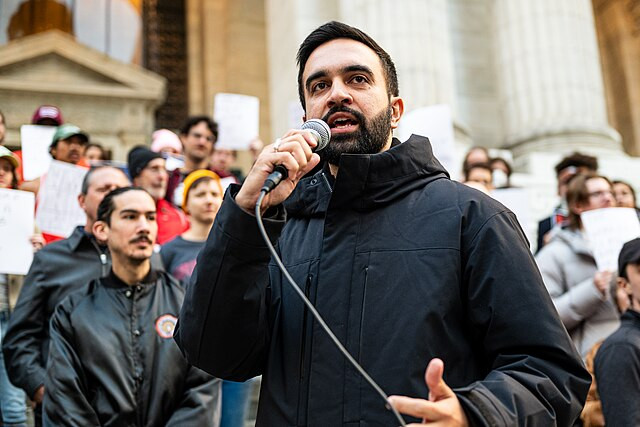
Zohran Mamdani skipped one of New York's most exclusive nights this week, turning down an invitation to the 2026 Met Gala and instead using the evening to spotlight housing affordability and fashion industry workers in a city increasingly defined by economic inequality.
The annual fundraiser for the Costume Institute at Metropolitan Museum of Art raised a record $42 million and drew celebrities, executives and political figures to Manhattan's Upper East Side. This year's honorary co-chairs included Jeff Bezos and Lauren Sánchez, alongside figures such as Beyoncé, Nicole Kidman and Venus Williams.
Mamdani stayed away entirely.
"My focus is on affordability and making the most expensive city in the United States affordable," Mamdani told Hell Gate ahead of the event. Neither the mayor nor his wife, Rama Duwaji, attended, and City Hall did not send a representative in their place.
The absence marked a break from a long-standing political tradition in New York. Former mayors Michael Bloomberg and Bill de Blasio regularly appeared at the gala during their administrations, viewing the event as both a cultural and civic fixture. More recently, former mayor Eric Adams scaled back participation amid criticism over political optics and elite donor culture.
For Mamdani, a democratic socialist who has repeatedly argued that billionaires should not exist alongside extreme poverty and housing insecurity, the gala presented a political contradiction difficult to reconcile with his public message.
Outside the museum, activists staged demonstrations targeting Amazon's labor practices and Bezos's involvement in the event. Posters near the venue described the evening as "The Bezos Met Gala: Brought to you by worker exploitation," according to reports cited in AOL coverage.
Instead of appearing on the red carpet, Mamdani's administration released a photo series titled Work of Art: Turning the Lens on the Workers Who Power Fashion. The project profiled seamstresses, tailors, retail employees and former Amazon delivery drivers involved in organizing around New York's Delivery Protection Act.
The portraits were designed as a deliberate contrast to the celebrity spectacle unfolding uptown. While cameras focused on couture gowns and diamond jewelry, City Hall redirected attention toward the labor behind the fashion industry itself.
The timing also amplified Mamdani's broader economic agenda. Since taking office, the mayor has made New York's housing crisis central to his administration, pushing proposals that include higher taxes on wealthy residents to finance affordable housing construction and tenant protections.
Supporters argue the Met Gala boycott reinforced that message by distancing the mayor from billionaire-driven cultural events during a period when many New Yorkers face record rents and limited housing availability.
Critics, however, dismissed the move as symbolic politics unlikely to materially change affordability pressures in the city. Some business groups and moderate Democrats privately questioned whether rejecting high-profile cultural institutions risks alienating donors and industries that contribute heavily to New York's economy and tourism sector.
Still, Mamdani's decision underscored a growing tension inside Democratic politics between progressive economic populism and elite cultural spaces traditionally aligned with liberal institutions.