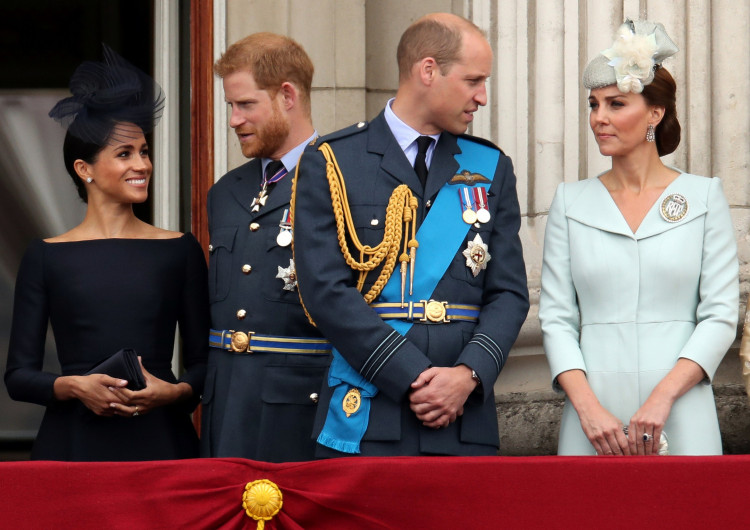
Kate Middleton quietly stepped back from efforts to keep Prince Harry inside the royal fold after becoming increasingly frustrated with tensions surrounding palace staff, according to a new biography that revisits the final months before the Sussexes left royal life in 2020.
In William and Catherine: The Intimate Inside Story, royal author Russell Myers argues that the Princess of Wales gradually concluded that the breakdown between Prince William and Prince Harry had become irreversible long before the Duke and Duchess of Sussex announced their departure from official duties. The book, released in the UK this week, portrays Kate as sympathetic to palace employees and increasingly resigned to the idea that Harry and Meghan Markle would eventually leave the monarchy behind.
The claims arrive more than six years after Harry and Meghan stepped away from senior royal duties and relocated to North America, a decision that triggered one of the deepest modern crises inside the British royal family. While speculation around the brothers' fractured relationship has circulated for years, Myers' account focuses heavily on Kate's evolving role inside the dispute and her reported reaction to growing friction behind palace walls.
According to Myers, Catherine initially viewed disagreements between William and Harry as ordinary family tensions amplified by royal pressure. The author writes that she once dismissed the disputes as "immaturity or stubbornness, on both sides," but later came to believe the divide reflected something more structural inside the monarchy itself.
The biography frames Harry's frustrations through the long-discussed "heir and spare" dynamic that shaped the brothers' lives from childhood. Myers claims Kate eventually accepted that Harry struggled with remaining secondary inside an institution built around William's future role as king.
The sharper break, according to the book, came through disputes involving staff.
Myers writes that "Harry and Meghan's attitude toward palace staff, whom they cared about, set the couple on an entirely different course," suggesting the Princess of Wales became increasingly uncomfortable with tensions surrounding Kensington Palace employees. The book does not detail every alleged incident, but it links the deterioration in relationships to concerns about how household staff were treated during the Sussexes' final years as working royals.
Those allegations inevitably revive memories of the bullying accusations first reported in 2021, when former aides accused Meghan Markle of mistreating palace employees. Buckingham Palace later confirmed it had launched an internal review into how complaints were handled.
Meghan strongly denied the allegations at the time. Through her legal representatives, she described the accusations as "a calculated smear campaign based on misleading and harmful misinformation."
Myers' account suggests Kate privately sided more closely with long-serving palace staff than with Harry and Meghan during that period. The biography portrays her as instinctively protective of royal employees and increasingly aligned with the institution's traditional culture rather than the Sussexes' reform-minded approach.
Where the book becomes especially revealing is in its claim that Kate eventually stopped trying to persuade Harry to remain a senior royal.
"Sources suggest she had less interest than her husband in trying to persuade Harry to stay in his current role," Myers writes. By contrast, the book describes Prince William as "intensely saddened at his brother's decision to quit."
The biography depicts William struggling emotionally with the collapse of a relationship that had once defined both brothers' public lives following the death of Princess Diana in 1997. Myers writes that memories of the brothers supporting one another through grief and years of public scrutiny became "tarnished by the division at the heart of the family."
Kate, meanwhile, is described as more detached from the emotional core of the conflict, observing the growing resentment from a relative distance. Myers claims she saw Harry and Meghan become "ever more bitter at having to follow the rules of a hierarchical and hereditary monarchy, until they felt as if they could follow them no longer."