Renewed military clashes between the United States and Iran are forcing the European Central Bank to reassess its interest-rate outlook, as rising oil prices threaten to deepen an energy shock that has already pushed eurozone inflation above the central bank's target and weakened expectations for economic growth.
Bundesbank President Joachim Nagel told Reuters that the latest Middle East fighting and renewed pressure on energy markets would be part of the ECB's deliberations when policymakers meet next week.
"The renewed outbreak of military conflict in the Middle East and the fresh rise in oil prices underscore that the situation remains extremely volatile and the uncertainty is similarly high," Nagel told Reuters.
The ECB raised its key interest rate at its most recent meeting, lifting it from 2% to 2.25% after four rate cuts during the first half of 2025. The reversal reflected a deteriorating inflation picture, with policymakers increasingly concerned that higher energy costs could become embedded in consumer prices.
The central bank now expects inflation to average 3% this year before easing to 2.3% in 2027 and 2% in 2028. Those projections were revised higher as policymakers incorporated expectations for more expensive energy into their forecasts.
At the same time, the ECB lowered its economic growth outlook, illustrating the policy dilemma confronting officials. The eurozone economy is now forecast to expand 0.8% this year, followed by growth of 1.2% in 2027 and 1.5% in 2028.
Inflation data have added to the pressure. Annual consumer-price inflation across the eurozone accelerated to 3.2% in May, extending a renewed rise in prices and moving further above the ECB's 2% target.
Nagel had warned in late June that the inflation threat had not disappeared even after Washington and Tehran reached a ceasefire. At the time, he said the "energy price shock" was "still in the system" and urged policymakers to remain cautious about assuming diplomatic talks would quickly stabilize prices.
That caution has gained new urgency as President Donald Trump weighs a broader U.S. military campaign against Iran.
According to Axios, Trump met with his senior national-security team in the White House Situation Room to discuss the next phase of U.S. operations. Vice President JD Vance, Secretary of State Marco Rubio, Defense Secretary Pete Hegseth and Chairman of the Joint Chiefs of Staff Gen. Dan Caine were among the officials who attended the meeting.
Axios reported that the discussions included potential plans to strike strategic targets inside Iran if hostilities continue to intensify. The deliberations come after U.S. forces concentrated recent attacks on Iranian air defenses, radar installations, anti-ship missile positions and drone launch sites.
Before the Situation Room meeting, Trump signaled that the military campaign could expand significantly.
"Next week it gets really bad for them," Trump told Fox News' Trey Yingst. "Next week comes the power plants, next week comes the bridges. We're going to knock out all of their power plants. We'll knock out all of their bridges unless they get to the table and negotiate."
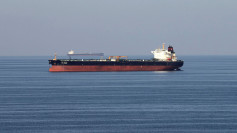
The Trump administration has said its immediate military objective is to reduce Iran's ability to attack commercial vessels transiting the Strait of Hormuz. The waterway is a critical artery for global energy shipments, making any sustained disruption a direct threat to oil supplies and prices far beyond the Middle East.
U.S. Central Command said Wednesday that American forces had conducted another wave of attacks "designed to further degrade military capabilities Iranian forces have used to attack commercial shipping" in the strait.
Iran, meanwhile, has continued attacks against U.S. bases in Jordan, Kuwait and Bahrain, widening the regional confrontation and raising the risk that energy markets could face a prolonged period of volatility.