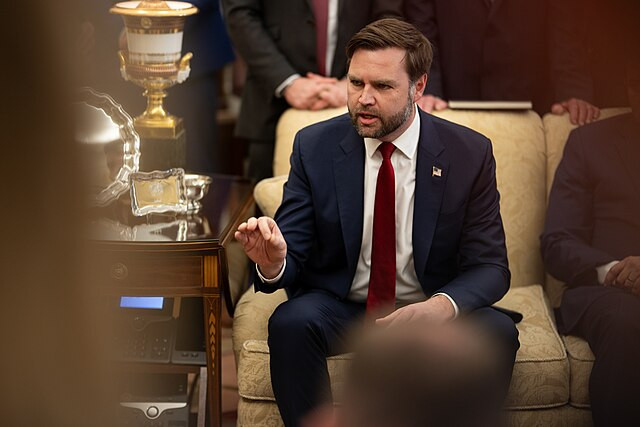
Vice President JD Vance said the United States and Iran are nearing a diplomatic breakthrough that could formalize a fragile ceasefire, reopen the Strait of Hormuz to commercial shipping and launch a new round of negotiations over Tehran's nuclear program, marking the most significant progress in U.S.-Iran relations since the recent conflict in the Persian Gulf.
Speaking about the ongoing negotiations, Vance said the two sides are closing in on an agreement but still remain divided on several details.
"We're going back and forth on a couple of language points. We've made a lot of progress here," Vance said. "Hopefully, we'll continue to make progress and the president will be in a position where he can endorse the agreement, but obviously that's still TBD."
The comments came as multiple reports suggested American and Iranian negotiators have already drafted a memorandum of understanding designed to extend the ceasefire and create a framework for broader diplomatic talks. According to Axios, the proposed document has largely been agreed upon by negotiators but still requires approval from senior political leadership in both countries.
Iranian officials reportedly told intermediaries that Tehran has already secured the necessary internal approvals and is prepared to move forward if Washington signs off on the final language.
The emerging framework centers on restoring stability to the Strait of Hormuz, one of the world's most strategically important energy corridors. Roughly one-fifth of global oil supplies move through the narrow waterway, making any disruption a major concern for energy markets and governments worldwide.
According to details reported by Axios, the proposed agreement would include several immediate measures:
- Unrestricted commercial shipping through the Strait of Hormuz.
- Removal of Iranian naval mines from the waterway within 30 days.
- Lifting of the U.S. naval blockade as commercial traffic resumes.
- A commitment by Iran not to pursue a nuclear weapon.
- A 60-day negotiation period focused on Tehran's nuclear program.
- Discussions regarding sanctions relief and access to frozen Iranian funds.
- Mechanisms to facilitate humanitarian aid and commercial goods.
The nuclear provisions are likely to attract the most scrutiny in Washington, Jerusalem and European capitals. Under the reported framework, negotiators would spend the next two months addressing Iran's stockpile of enriched uranium and establishing parameters for future monitoring and verification measures.
President Donald Trump has not yet formally endorsed the proposal. According to officials cited by Axios, Trump told mediators he wanted "a couple of days to think about" the final text before making a decision. Senior administration officials reportedly believe the president is inclined to support the agreement but wants to assess domestic political reactions before giving final approval.
The diplomatic progress has unfolded against a backdrop of continued military tensions in the region.
This week, U.S. forces reported shooting down four Iranian one-way attack drones and striking a ground-control facility that American officials said posed a direct threat to both U.S. personnel and commercial shipping. The operation occurred near Bandar Abbas, a critical Iranian port city overlooking the Strait of Hormuz.
Iranian media, meanwhile, claimed U.S. naval vessels attempted to transit the waterway without authorization from Tehran before the confrontation. The competing narratives underscore how fragile the ceasefire remains despite ongoing negotiations.
A U.S. official told NBC News that the latest military actions were limited in scope and should not be interpreted as a return to broader combat operations. Instead, officials described them as defensive measures intended to protect forces and maintain freedom of navigation while diplomatic efforts continue.