President Donald Trump's secret transfer from Air Force One to another military aircraft during a security scare in Turkey has triggered anger among some White House staff and journalists who reportedly weren't told the president had left their plane as U.S. officials responded to intelligence about a possible Iranian missile threat.
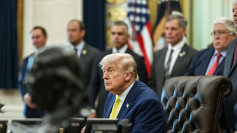
The July 8 operation unfolded after Trump attended a NATO summit in Ankara. The president publicly boarded the older Boeing 747 used as Air Force One, but was subsequently moved out of view to a smaller C-32A military aircraft, according to the supplied reports, while journalists, aides and senior administration officials remained aboard the larger jet.
Trump has said the unusual travel arrangement was made at the direction of his security detail. "I just did what [the Secret Service] told me," Trump said Tuesday in Ohio.
What has generated internal criticism isn't the decision to move the president, but whether others aboard the original aircraft were adequately informed about the threat. Some reportedly believed Trump remained with them as their plane prepared to depart Turkey.
"Apparently not. He got off the plane and left us there," a high-ranking Trump staff member told reporter Brian Karem. The official described the passengers remaining aboard as "potential sitting ducks in the event of a missile attack."
Another senior staff member was more pointed. "How would you feel if you were cannon fodder?" the person said, according to Karem.
The security operation was reportedly triggered by intelligence concerning a possible Iranian threat to Trump or his aircraft. U.S. officials haven't publicly disclosed the full intelligence underlying the decision, including the precise level of danger faced by either aircraft.
Trump had arrived using a newer Boeing 747-8 donated by Qatar, but reporting indicated that aircraft didn't have all the defensive capabilities officials wanted under the circumstances. The president therefore publicly appeared to switch to the older Air Force One for part of his journey home.
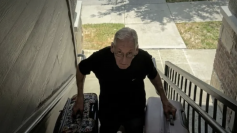
Behind the scenes, the operation was considerably more complicated. Trump was reportedly removed from the presidential aircraft using an airport catering truck on the side hidden from public view and transferred to a C-32A, the military version of a Boeing 757.
That aircraft transported Trump separately from Ankara to a U.S. military installation in Britain. He was later moved back onto the larger presidential aircraft before appearing publicly, preserving the impression that he had made the trip aboard the plane carrying much of his staff and the press.
The account has raised a more difficult question than whether extraordinary measures were warranted to protect a president facing a potential assassination threat: whether keeping passengers unaware of the switch effectively transformed their aircraft into a decoy.
There are conflicting accounts about how widely the plan was known inside the administration. Secretary of State Marco Rubio and Treasury Secretary Scott Bessent were reportedly among the senior officials aboard the aircraft Trump left behind.
Reports indicated Rubio knew about both the switch and the potential threat, while Bessent's level of knowledge is less clear. Karem reported that Rubio gave a slight grin and walked away when questioned by journalists about the episode, though that interaction doesn't establish what he knew about the operational details.
Some members of the travelling press were also disturbed by the incident. At least two journalists told Karem they had since made preparations for future presidential travel and put their "affairs in order," reflecting concerns about the risks accompanying the press pool during high-threat overseas trips.
Former Clinton White House press secretary Joe Lockhart contrasted the episode with security preparations for President Bill Clinton's trip to Pakistan in 2000. According to Lockhart, Clinton's team rejected the idea of using civilians and journalists as unwitting decoys and told members of the press when the president wouldn't be aboard their aircraft.
"There is simply no reason why we should accept that behaviour, and the reporters and the staff who were left behind have every reason to be upset," Lockhart said. "The president's life is paramount. But that's not an excuse for forgetting everyone else."