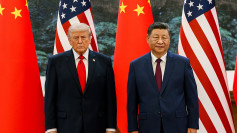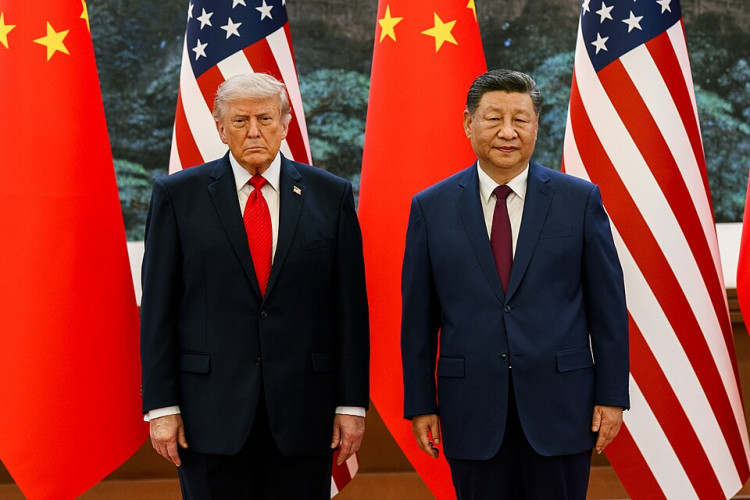
WASHINGTON - President Donald Trump and Chinese President Xi Jinping agreed to establish new mechanisms for managing artificial intelligence incidents and preventing military confrontations, seeking to stabilize relations between the world's two largest economies after a three-day summit that left their fundamental disagreements largely unresolved.
The agreements, announced Saturday by both governments, establish additional channels for cooperation as Washington and Beijing extend their trade truce and pursue negotiations over tariffs, critical minerals and market access. The leaders also agreed to further discussions on several international security issues.
The summit marked another effort to manage tensions following a trade war that disrupted global commerce last year. While neither government announced major concessions on longstanding disputes, the negotiations produced commitments to expand communication between officials responsible for trade, defense and emerging technologies.
China's Foreign Ministry said the countries would sign a memorandum of understanding aimed at strengthening military crisis communications. Both governments also agreed to establish a dedicated channel for handling AI-related incidents, with further discussions scheduled for November.
The White House said the leaders adopted the term "super intelligence" for applicable emerging technologies and established a bilateral dialogue to examine their potential risks and benefits. The arrangements provide a framework for continued discussions rather than a comprehensive agreement regulating AI development.
Economic negotiations produced a preliminary understanding on more favorable tariff treatment for approximately $30 billion in non-sensitive goods traded in each direction. The proposals cover American agricultural products, seafood, timber and medical devices, alongside Chinese consumer goods including toys and household appliances.
The two governments also activated their Board of Trade, established during the leaders' May summit in Beijing, and launched negotiations addressing agricultural market-access barriers. A separate Board of Investment will examine commercial opportunities and obstacles facing companies in both countries.
Beijing committed to purchasing at least 10 million metric tons of American coal annually in 2027 and 2028, according to the White House. Trump also urged Xi to increase production of refined petroleum products to help stabilize global energy supplies.
Uncertainty remains over China's restrictions on rare-earth exports, a continuing concern for American manufacturers. Washington said negotiations would seek to restore shipments to appropriate levels after Beijing imposed controls in response to U.S. tariffs last year.
The leaders also addressed international security, agreeing that Iran should not develop nuclear weapons and opposing tolls on international waterways. Trump separately proposed trilateral arms-control negotiations involving the United States, China and Russia.
On fentanyl enforcement, Washington welcomed China's additional export controls on two precursor chemicals and cited the August arrests of 21 Chinese citizens following information supplied by American law-enforcement agencies.
Wang Zichen, deputy secretary-general of the Beijing-based Center for China and Globalization, told the Associated Press that working-level engagement and military crisis-management arrangements could help make stability between the two countries more durable.
The presidents are expected to meet again at November's Asia-Pacific Economic Cooperation summit in Shenzhen, followed by the Group of 20 gathering at Trump's Doral resort in Florida. Xi returned to Beijing on Saturday, according to China's state-run Xinhua news agency.