Japan protested new Chinese trade measures targeting a key semiconductor chemical, escalating a broader dispute between Asia's two largest economies as Beijing moves to protect domestic producers and tighten pressure on Tokyo.
China's Commerce Ministry said importers of dichlorosilane, or DCS, from Japan must post cash deposits of as much as 99.2% beginning Tuesday. The provisional measures follow an anti-dumping investigation into Japanese shipments of the chemical, which is widely used in semiconductor manufacturing.
Japan's Chief Cabinet Secretary Minoru Kihara said Tokyo was examining the measures and their potential effect on Japanese companies. He said Japan would respond appropriately to prevent unfair harm to businesses.
The restrictions apply to suppliers including Shin-Etsu Chemical and Denal Silane. China says Japanese DCS has been sold in ways that harmed domestic producers, though the investigation remains ongoing and a final determination will come later.
DCS is used in chemical vapor deposition, a process that creates thin layers of silicon and other materials on semiconductor wafers. Those layers are critical in the production of logic and memory chips.
Japan is the world's leading producer of ultra-high-purity DCS used in advanced chip fabrication, giving the material strategic importance within the semiconductor supply chain. China, meanwhile, has been working to strengthen its own capacity in chipmaking materials, equipment and manufacturing systems as part of a broader push for technological self-sufficiency.
Chinese producers could benefit from the new measures. Shares of Tangshan Sunfar Silicon Industry rose to their 10% daily limit in Shanghai after the announcement. A unit of the company filed the complaint that triggered the anti-dumping investigation and has said it accounts for more than half of China's domestic DCS production.
Shin-Etsu Chemical shares fell as much as 1.5% in Tokyo. A company spokesperson said the firm was reviewing the Chinese announcement but expected no impact on earnings because DCS represents only a small part of its overall business.
The immediate commercial impact could also be limited by shifts in China's sourcing. South Korea became China's largest supplier of DCS in 2025, while Japanese shipments in July were worth about $2.6 million and represented roughly one-third of China's total imports, according to customs data cited by The Japan Times.
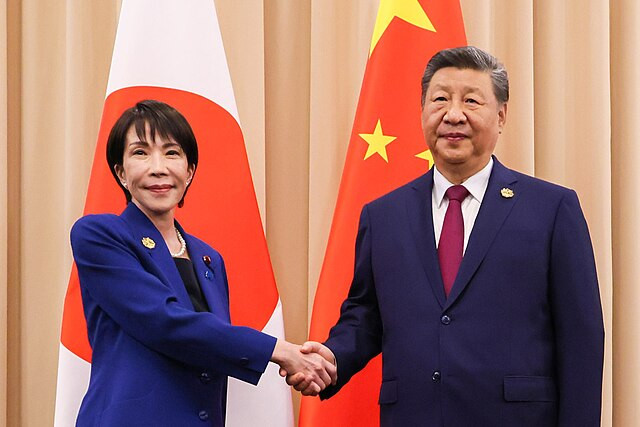
The trade action comes amid worsening political tensions between Beijing and Tokyo. Relations deteriorated after Japanese Prime Minister Sanae Takaichi said last November that Japan could potentially deploy its military if China attempted to seize Taiwan, the self-governed island Beijing claims as its territory.
China has since taken several steps affecting Japan, including tighter controls on some dual-use exports and warnings to Chinese travelers about visiting the country. Shipments of rare-earth materials to Japan have also declined this year.
The latest DCS measures were issued as part of a preliminary ruling in the anti-dumping case launched in January. Chinese officials said the investigation found that Japanese imports had caused substantial harm to the domestic industry, leaving the final outcome-and the longer-term effect on Japan's semiconductor-material suppliers-still unresolved.