China has imposed new trade restrictions on dozens of American companies, including defense contractors, drone manufacturers and rare-earth firms, in a measured retaliation against the Pentagon's decision to expand its list of Chinese companies allegedly linked to Beijing's military.
The moves announced Monday by China's Ministry of Commerce and Ministry of Finance underscore the growing use of economic and regulatory tools by both Washington and Beijing as competition between the world's two largest economies increasingly centers on technology, national security and defense supply chains.
At the center of the dispute is the Pentagon's updated "1260H" list, which earlier this month added several major Chinese technology companies, including Alibaba, Baidu and electric-vehicle manufacturer BYD. U.S. officials argue the companies have ties to China's military establishment, a characterization that several targeted firms strongly reject.
China responded by placing 10 American companies on its export control list, effectively prohibiting Chinese suppliers from providing dual-use products to those firms. Dual-use goods refer to products that can serve both civilian and military purposes.
Among the companies targeted are:
- MP Materials Corp
- USA Rare Earth
- Teal Drones
- Jaia Robotics
- Aveox Inc.
- Ball Aerospace & Technologies Corp.
- Oshkosh Defense
- L3Harris Maritime Services
- IMSAR
- Red Cat Holdings
The Commerce Ministry said the restrictions were necessary to protect China's national security and counter what it described as Washington's improper expansion of the "List of Chinese Military Companies."
In a separate measure, China's Finance Ministry barred government entities from purchasing products and services from 46 American companies, most of them major defense contractors. The list includes units affiliated with Lockheed Martin, Raytheon and General Dynamics, according to official statements.
The retaliation comes amid a broader effort by both governments to limit strategic dependencies in sensitive sectors such as semiconductors, artificial intelligence, defense technologies, rare earth minerals and advanced manufacturing.
Yet analysts said the immediate commercial impact is likely to be limited.
George Chen, partner for Greater China at The Asia Group, described Beijing's actions as a calibrated response rather than a major escalation.
"Most of them are U.S. defense industry players or they have close connections with the U.S. government for contracts and other reasons," Chen said. "Those companies are not going to do business in China, so the impact will be quite symbolic."
That view was echoed by Han Shen Lin, China country director at consultancy The Asia Group, who noted that many of the affected U.S. firms have little direct exposure to the Chinese market.
The Pentagon's blacklist carries its own limitations. The designation does not immediately impose sanctions on listed Chinese companies. However, beginning June 30, the Defense Department will be prohibited from awarding direct contracts to those entities. Additional restrictions covering indirect procurement are scheduled to take effect in 2027.
While largely symbolic in financial terms, inclusion on the list can create reputational and commercial consequences. Federal agencies, defense suppliers and private-sector partners often become more cautious when dealing with companies identified by the Pentagon as having military links.
Several Chinese companies have already challenged similar designations in court. Xiaomi successfully fought its inclusion on a previous Pentagon list and secured removal in 2021 after a federal court ruling.
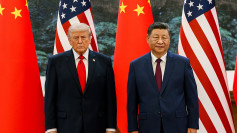
Beijing has repeatedly criticized the U.S. approach, accusing Washington of weaponizing national-security concerns to restrict Chinese companies. Following the Pentagon's latest update, China's Commerce Ministry said the measures undermined understandings reached between Chinese President Xi Jinping and President Donald Trump during Trump's visit to China earlier this year.
Dan Wang, China director at Eurasia Group, said the latest response offers insight into how Beijing may handle future disputes with Washington.
The measures provide a "model example" of how China is likely to respond to limited U.S. escalations while attempting to preserve overall stability in bilateral relations, Wang said, noting that recent high-level diplomacy between Trump and Xi helped place the broader relationship on firmer footing.