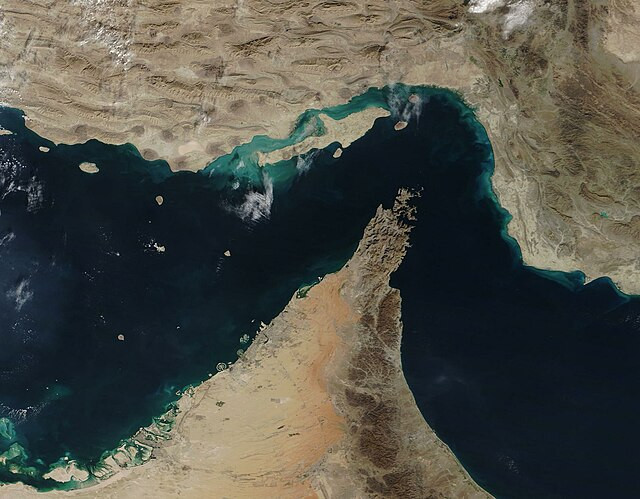
Oil prices climbed Thursday after reports that Iran warned Gulf governments it could target regional energy infrastructure if they fail to persuade President Donald Trump to halt U.S. military strikes, underscoring the fragile balance between escalating regional threats and ongoing diplomatic efforts to stabilize shipping through the Strait of Hormuz.
Brent crude, the international benchmark, rose more than 2% to trade above $81 a barrel during morning trading, while U.S. benchmark West Texas Intermediate gained a similar percentage to trade above $76.50. The advance came despite public statements from both Washington and Tehran suggesting negotiations over navigation through the Strait of Hormuz were making progress.
According to Reuters, Iranian Foreign Minister Abbas Araghchi delivered messages to counterparts in Saudi Arabia, Qatar and Turkey, as well as Pakistan's army chief, warning that continued U.S. military operations against Iran could trigger retaliation against Gulf energy assets.
Quoting a source familiar with the communications, Reuters reported: "The Iranian warning was unequivocal: if America targeted Iran's infrastructure, they would retaliate by striking Gulf energy facilities and other regional targets."
The reported warning adds another layer of uncertainty for global energy markets, which remain highly sensitive to developments surrounding the Strait of Hormuz, one of the world's most strategically important maritime corridors. Roughly one-fifth of globally traded oil passes through the narrow waterway, making any disruption an immediate concern for governments, shipping companies and commodity traders.
Despite the renewed security concerns, both U.S. and Iranian officials continued to project cautious optimism regarding diplomatic efforts.
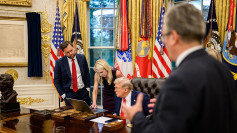
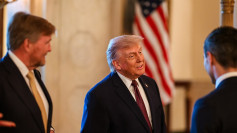
Speaking to reporters, President Donald Trump said negotiations over maritime access were "working out quite well," while reiterating that military operations could resume if diplomacy failed.
"We are ready to go," Trump said, signaling that Washington continues to view military pressure as an option should negotiations collapse.
Iranian officials, meanwhile, offered a more nuanced assessment of the diplomatic process.
Deputy Foreign Minister Kazem Gharibabadi said the United States appeared prepared to "return to commitments," though he did not specify which commitments he was referencing. His remarks were widely interpreted as referring to the memorandum of understanding reached in mid-June, under which Iran agreed to permit commercial navigation through the Strait of Hormuz without charging transit fees for a temporary 60-day period while broader negotiations continued.
Gharibabadi also emphasized that current discussions over shipping routes were not taking place directly between Washington and Tehran.
Instead, he said negotiations concerning navigation through the Strait were being conducted between Iran and Oman.
He added that "no negotiations with the US have taken place during this period," underscoring Oman's continuing role as an intermediary.
According to Gharibabadi, the two sides are close to reaching an "understanding" over revised navigation arrangements because "old routes no longer meet the current difficult conditions that have jeopardized the national security of the Islamic Republic of Iran."
Iranian Foreign Ministry spokesperson Esmail Baghaei similarly suggested progress remained possible, saying an agreement was within reach provided that "some third parties do not obstruct work in this regard."
Reuters previously reported that Iran is seeking greater oversight of commercial traffic moving through the Strait of Hormuz, including enhanced monitoring of inbound vessels and increased authority over outbound shipping. Those proposals reflect Tehran's broader effort to tighten control over one of the world's most important energy transit corridors while balancing negotiations intended to reduce military tensions.