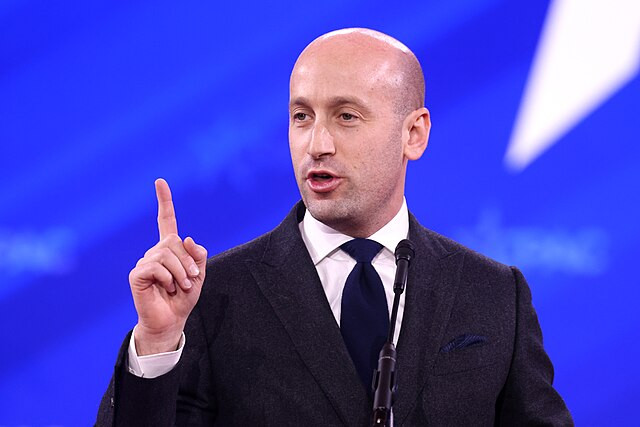
White House Deputy Chief of Staff Stephen Miller is directing a broad federal effort to accelerate deportations of undocumented migrant children, with more than 200,000 minors receiving removal orders since President Donald Trump returned to office in January 2025, according to a Guardian investigation. The initiative has drawn on agencies across at least five cabinet-level departments, linking immigration enforcement more closely with the federal systems responsible for courts, child custody and sponsor placement.
The pace has increased sharply. The Guardian reported that immigration courts issued 7,366 removal orders involving children in January 2025, compared with more than 16,000 a month in June and July 2026. About 70% of the children ordered removed were younger than 13.
The administration says the changes are intended to protect children who entered the country without authorization from trafficking and exploitation. "We are ensuring these children are reunited with their parents and families in their home countries," White House spokeswoman Lauren Bis told The Guardian.
Current and former officials cited by the newspaper described Miller as a central coordinator of the strategy, bringing together the Department of Homeland Security, Department of Health and Human Services, Justice Department and other agencies. Miller has long been one of Trump's most influential advisers on immigration and has played a prominent role in implementing the administration's broader deportation agenda.
The effort represents a significant shift in how parts of the federal government handle unaccompanied migrant children. Agencies traditionally focused on sheltering children and identifying appropriate sponsors are increasingly sharing information and coordinating with immigration authorities, according to The Guardian. Critics argue that the changes risk blurring the distinction between child-welfare functions and immigration enforcement.
One element involves federal agents visiting homes and schools to conduct what the Department of Homeland Security describes as welfare checks on children who previously crossed the border without a parent. The government says the checks are designed to identify trafficking, abuse and other dangers, while immigration advocates say the information collected can also expose children and their sponsors to enforcement action.
The administration has also increased scrutiny of adults seeking to sponsor unaccompanied children. Immigration and Customs Enforcement officers have appeared at some sponsor-related appointments, while information collected by the Office of Refugee Resettlement has become more accessible to immigration enforcement, according to The Guardian.
Those changes have coincided with longer stays for some children in government custody. The Guardian reported this month that nearly 90% of children in federal custody with newly opened immigration cases were being directed to Texas, where advocates raised concerns about access to attorneys and the licensing status of facilities housing minors.
More than 1,800 migrant children remained in federal custody at the time of The Guardian's investigation. Advocates say prospective sponsors are increasingly reluctant to come forward because they fear contact with immigration authorities, potentially leaving children in shelters longer. Administration officials maintain that stronger screening is necessary to avoid releasing children to adults who could exploit or abuse them.
Access to lawyers has become another major point of contention. A federal contract supporting legal services for unaccompanied children expired July 31, threatening representation for more than 20,000 minors navigating immigration proceedings. The Associated Press reported that nonprofit legal providers had already faced months of uncertainty over federal payments before the contract ended.
The consequences are particularly significant because immigration proceedings are civil rather than criminal, meaning children aren't automatically guaranteed government-appointed attorneys. Some young children have appeared before immigration judges without an attorney actively representing them, leaving them to navigate a system involving asylum law, removal proceedings and other forms of humanitarian protection.
Legal-service organizations said the expired program had supported a nationwide network of nearly 100 providers. New York officials subsequently announced $7.25 million in state funding intended to provide legal services to roughly 1,400 unaccompanied minors, an example of state governments attempting to fill part of the gap left by changes in federal support.
The administration's strategy also includes moving immigration cases more quickly. Immigration judges have received instructions aimed at limiting delays in some proceedings, including cases in which immigrants are waiting for visas or green cards, according to separate Guardian reporting.
Supporters of stricter enforcement argue that lengthy proceedings and insufficient sponsor screening can leave children vulnerable while allowing people without legal status to remain in the country for years. The administration has repeatedly framed expanded screening and removals as part of an effort to disrupt trafficking networks and restore enforcement of immigration law.
Immigrant-rights advocates and legal-service organizations dispute that characterization, arguing that faster court schedules, reduced access to lawyers and greater information-sharing with ICE can make it harder for children with potentially valid asylum or other protection claims to present their cases. The federal law governing unaccompanied minors includes procedures intended to screen children for trafficking and potential eligibility for immigration relief.