Denmark and Greenland said Saturday that a new security agreement expanding the U.S. military role on the Arctic island won't surrender Greenland's sovereignty, drawing a distinction between their description of the pact and President Donald Trump's claim that Washington has secured "permanent control" over security and other needs there.
The United States, Denmark and Greenland announced Friday that they had reached an agreement allowing a significant American military presence in Greenland while preventing U.S. adversaries from establishing bases on the island or making certain sensitive investments. The agreement is expected to be signed around next week's United Nations General Assembly and remains subject to parliamentary approval in Denmark and Greenland.
The full text hasn't been released, leaving important details unresolved. Among them are the eventual scale of the American military footprint and the precise mechanisms Washington would use to restrict military activity or sensitive investments by adversaries.
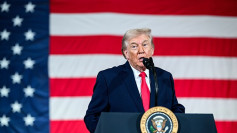
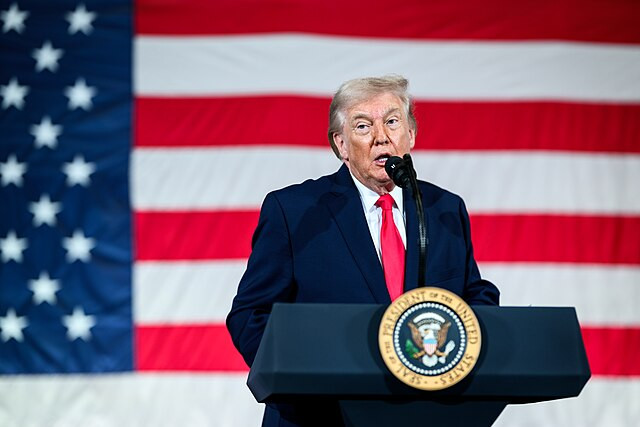
Trump presented the agreement in sweeping terms Friday. "The United States will FOREVER have the complete ability to do what is necessary in Greenland in order to secure and defend the security of Greenland, and the United States of America," he wrote on Truth Social.
Trump said the agreement gives Washington "permanent control over security, and all other needs, in Greenland." He added that no U.S. adversary would be permitted to establish a base or military presence or make sensitive investments there without Washington's written approval.
Danish and Greenlandic officials described the arrangement differently, stressing that expanded U.S. security responsibilities don't amount to a transfer of sovereignty. Greenland remains a self-governing territory within the Kingdom of Denmark, and Copenhagen and Nuuk have repeatedly said the island isn't for sale.
"Next week could be a good week - for Greenland, Denmark, and the United States," Danish Foreign Minister Lars Lokke Rasmussen said Saturday. He said months of uncertainty could be replaced by a binding agreement strengthening security in the Arctic and North Atlantic while respecting the Danish kingdom's "red lines."
Greenland Prime Minister Jens-Frederik Nielsen also welcomed the negotiations while emphasizing the island's political status. "The agreement recognizes the sovereignty and territorial integrity of our Kingdom and the right of the Greenlandic people to self-determination," Nielsen wrote.
The difference in language is significant. Trump is describing enduring U.S. authority over Greenland's security environment, while Denmark and Greenland are emphasizing that territorial sovereignty and Greenlanders' right to determine their political future remain intact. Until the agreement itself is published, the precise legal boundaries of Washington's role can't be independently assessed.
The agreement follows months of tension after Trump repeatedly argued that U.S. control of Greenland was necessary for national security. His threats to take control of the territory, which intensified in January, triggered a diplomatic crisis with Denmark and strained relations within NATO.
Greenland has strategic importance because of its location between North America and Europe and its role in Arctic defense. The U.S. already operates Pituffik Space Base in northwestern Greenland, and the new agreement is expected to allow Washington to develop a larger military presence at additional locations.
The pact also seeks to exclude U.S. adversaries from establishing a strategic foothold on the island. Trump said the agreement would prevent hostile powers from setting up bases, maintaining a military presence or undertaking sensitive investments without U.S. approval. The publicly available announcements haven't spelled out how those restrictions would be enforced.
NATO welcomed the agreement Saturday. A spokesperson said it would "help advance security, stability and cooperation in this vital region," an indication that the alliance views the arrangement as part of the broader effort to strengthen Arctic and North Atlantic defenses.
The negotiations could ease one of the most unusual disputes between NATO allies in recent years. Denmark and Greenland entered talks after rejecting Trump's previous suggestions that the U.S. could acquire the territory, maintaining throughout the negotiations that expanded defense cooperation couldn't come at the expense of sovereignty.
Mikkel Vedby Rasmussen, a political-science professor at the University of Copenhagen, cautioned that questions about American influence could persist even after an agreement is signed. He said that if Copenhagen were to surrender formal authority to Washington, Greenlanders could ask whether they were seeing "the beginning of replacing the colonial relationship with Denmark with a colonial relationship to the United States." No publicly released evidence so far establishes that the pending agreement makes such a transfer.
Reaction among Danes has also reflected lingering unease. Steffen Nielsen, a 49-year-old sales worker interviewed by Reuters, said the U.S. was probably obtaining something it could have secured "if they just asked nicely," while 80-year-old pensioner Kaj Jorgensen said: "I don't like it. I don't wish the United States to be present anywhere in the Danish Kingdom. I really don't trust Donald Trump."
The unresolved issue is therefore less whether the U.S. military role will expand-the three governments agree that it will-than what Trump's assertion of "permanent control" means legally. Denmark and Greenland say the coming agreement preserves the kingdom's territorial integrity and Greenlandic self-determination, while key provisions defining the limits of U.S. authority remain undisclosed ahead of the planned signing.