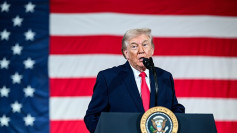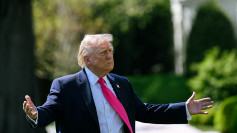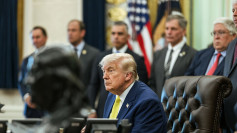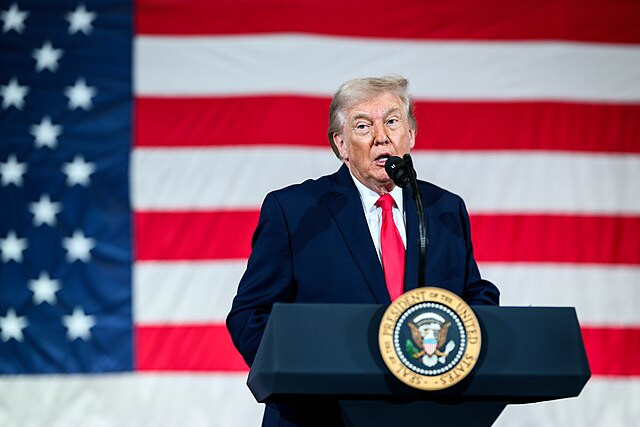
President Donald Trump says he would repeatedly veto Democratic legislation if Republicans lose control of Congress in Tuesday's midterm elections, outlining a strategy of blocking bills before seeking negotiations with a new majority.
"Well, if that happens, I guess I'll become Mr. Veto. I'm not going to let them through," Trump said in an interview with New York Post columnist Miranda Devine for her Pod Force One podcast.
His comments come as Decision Desk HQ's latest forecast gives Democrats an 84% probability of winning the House and a 64% chance of capturing the Senate. Those figures represent modelled probabilities, not projected vote shares or guaranteed outcomes.
Trump suggested that a succession of rejected bills could eventually bring Democratic lawmakers to the bargaining table.
"And then at some point, we'll probably make deals," he said. "This wouldn't be the first time you'll have a president, and he won't have the House or the Senate."
The remarks set out how Trump might use his remaining legislative leverage under divided government. A Democratic majority could advance its own proposals, but the president could reject bills unless lawmakers assembled sufficient support to override him.
The administration is also preparing to pursue policies without new legislation. Reuters reported November 1 that deputy chief of staff Stephen Miller and budget director Russell Vought have been working with the White House Counsel's Office to identify options across immigration, tariffs, housing costs and federal spending.
White House counsel Will Scharf and his team have been examining the limits of executive authority and potential legal defences for unilateral action, according to Reuters.
That planning extends to congressional scrutiny. White House lawyers have briefed political appointees and agency leaders on responding to investigations, subpoenas and document requests. They have also examined whether executive privilege could protect communications with private advisers.
Democratic control of either chamber would give the party greater authority over committees and investigations. A Senate majority would additionally allow Democrats to reject presidential nominees, giving them influence beyond legislation subject to a veto.
Trump has previously governed without unified Republican control. Democrats took over the House in 2019, midway through his first term, while Republicans retained the Senate.
He issued 10 vetoes during that administration. They included measures challenging his border-wall emergency declaration, seeking to end American involvement in the Yemen conflict and restricting military action against Iran.
Congress overrode his veto of the fiscal 2021 National Defense Authorization Act. An override requires a two-thirds majority of members voting in each chamber, a threshold that can be difficult to reach when the president retains substantial support within his party.
During his second administration, Trump vetoed the Finish the Arkansas Valley Conduit Act and the Miccosukee Reserved Area Amendments Act on December 29, 2025. The House failed to overturn either veto on January 8, 2026.
Repeated vetoes would not themselves trigger a government shutdown. Disputes over legislation funding federal operations, however, could complicate spending negotiations between a Democratic Congress and the White House.
Trump said he hoped Republicans would retain control, while describing an eventual agreement with Democrats as a possible outcome of sustained vetoes: "Take them over and you make a deal. I think that probably would happen, but hopefully we don't have to worry about them."