Pentagon officials have privately urged several NATO allies to moderate their public statements about Russia, Reuters reported Friday, as Washington renews efforts to negotiate an end to the Ukraine war while European governments confront suspected sabotage and consider stronger deterrence measures.
Lithuania, Latvia and Estonia received the messages during bilateral meetings in recent weeks, according to four people familiar with the discussions. U.S. officials argued that some European rhetoric was undermining continental security, though the sources described the exchanges as nonconfrontational.
"Private conversations among allies are just that, so we will not comment on these allegations," a Pentagon official told Reuters.
The requests expose differences within NATO over how to communicate the Russian threat. Some officials believe forceful warnings help the Kremlin spread fear, while others argue governments must explain the risks to secure public support for defence spending and assistance to Ukraine.
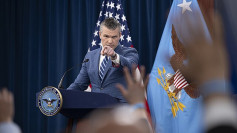
Pentagon policy chief Elbridge Colby was among those delivering the message, Reuters reported. In one discussion with a Baltic official, he reportedly cautioned against "poking" Russia and cited descriptions of Moscow as "cornered like a rat."
Reuters could not establish which statement he meant. Estonian Prime Minister Kristen Michal called Vladimir Putin a "rat in a corner" in September, arguing that battlefield difficulties were pushing the Russian leader toward sabotage in Europe.
The defence ministries of the three Baltic countries did not respond to Reuters' requests for comment. NATO declined to comment.
Washington's diplomatic push combines incentives for Moscow, including sanctions relief, with pressure on Kyiv to stop attacking Russian energy infrastructure. U.S. officials are also discussing potential business arrangements with Russia, drawing concern from European officials who favour continued economic isolation.
European governments are meanwhile exploring ways to strengthen deterrence. The Wall Street Journal reported that France is taking a leading role in a plan involving new infrastructure, communications systems and possible deployments of nuclear-capable Rafale aircraft across participating countries.
The initiative also involves Britain, Germany, Poland, Belgium, Finland and Denmark. Finnish President Alexander Stubb said Helsinki had no plans to station nuclear weapons on its territory during peacetime, but wanted to complicate Russia's strategic calculations.
"We felt it would be useful for our security to get information, to be involved in it. We don't know where this is going to end, it's probably a 10- to 15-years process," Stubb said.
France recently tested an updated submarine-launched ballistic missile without a nuclear warhead. The exercise followed a Russian warning that Moscow could use nuclear weapons if NATO attempted to isolate its Kaliningrad enclave.
Suspected covert attacks have added to European concerns. The Journal reported that U.S. intelligence concluded Putin personally ordered an intensified sabotage campaign, with an attempted drone attack at Germany's Leipzig-Halle Airport among its opening operations.
Russia denies involvement in sabotage across Europe. German prosecutors separately announced Wednesday that two Belarusians had been arrested on suspicion of planning an arson attack against a building or critical infrastructure near Nuremberg.