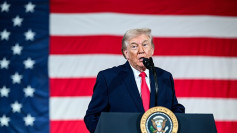
President Donald Trump's confrontation with a heckler at a South Carolina rally Thursday drew online criticism after he called the man a "sloppy-looking guy," prompting commenters to turn their attention to the president's own appearance.
The interruption occurred minutes into an appearance supporting Republican Sen. Darline Graham, who faces Democrat Annie Andrews in a closely contested Senate race. Trump turned toward the protester as he was being removed and described him as a "paid protester."
The reporting provided no evidence that the man had been paid to attend or disrupt the event. It also did not identify him or explain what he shouted before his removal.
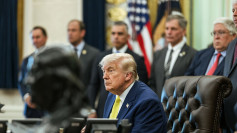
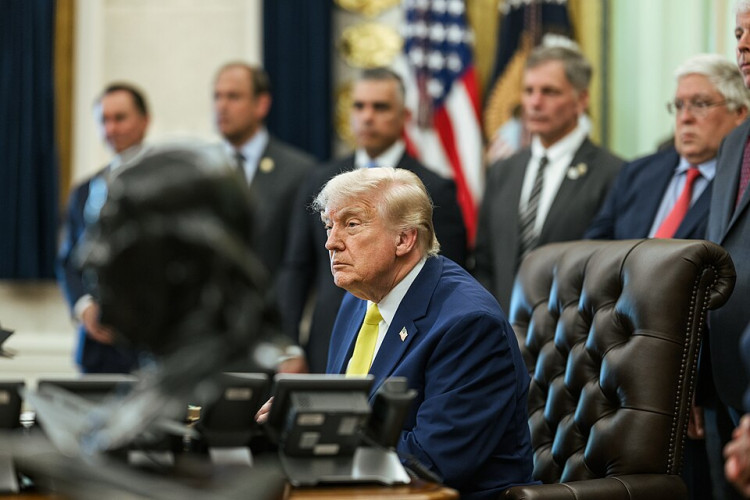
Video of Trump turning toward the disturbance circulated alongside comments about the folds beneath his chin. Some responses challenged his decision to insult the heckler's appearance; others simply mocked the president's looks.
"Very rich to call someone else SLOPPY!!!! That is absolutely hilarious. This man is completely out of shape," one commenter wrote.
That response echoed the personal nature of Trump's remark rather than addressing his allegation about the protester. Other posts went further, using derogatory descriptions of the president and suggesting cosmetic surgery.
The comments were insults, not medical assessments. The footage and photographs described in the reports offer no basis for drawing conclusions about Trump's health.
An earlier image showing Trump departing for South Carolina also attracted remarks about his neck. Together, the responses shifted some online discussion away from the campaign appearance and toward a brief exchange near the beginning of his speech.
The supplied accounts did not identify the commenters or provide engagement figures, making it unclear how widely the reactions extended beyond the quoted posts. Nor did they include a response from the White House to the criticism.
Trump's visit came as Republicans sought to defend a Senate seat in a state where the party ordinarily enjoys a substantial advantage. Graham entered the Senate in July following the sudden death of her brother, Lindsey Graham, according to the reports.
Andrews has mounted a competitive challenge, with the race described as effectively tied in recent polling. The accounts did not identify the surveys, their field dates or margins of error.
The tightening contest has drawn national attention and additional Republican financial support. A prominent Republican super PAC has pledged $5 million to support Graham's campaign, according to the reporting.
The candidates' recent debate covered Trump's legislative agenda and the economic pressures facing households, including higher gasoline and grocery prices. They also disputed the consequences of his "one, big beautiful bill."
The war in Iran and the development of artificial-intelligence data centres were additional points of contention. Those issues formed part of a broader argument over the administration's record as the candidates approached the November 3 election.
Trump has retained support among South Carolina Republicans, making his endorsement an important element of Graham's campaign. Democrats, meanwhile, are seeking to turn the unusually competitive contest into an opportunity to capture a seat in a traditionally Republican state.