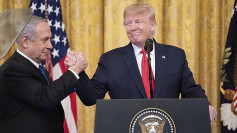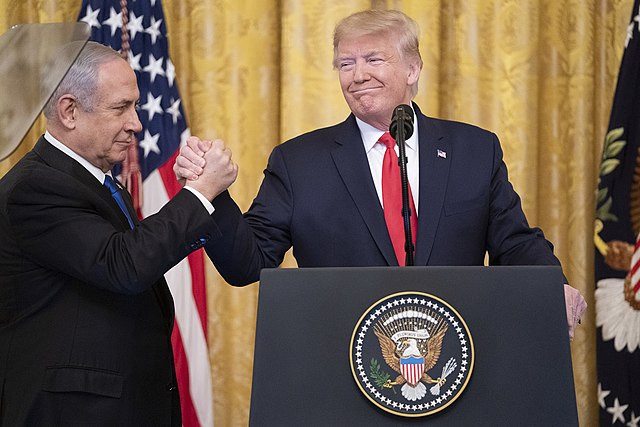
President Donald Trump said Tuesday that the United States would stop providing roughly $4 billion in annual aid to Israel at the end of 2026, claiming an agreement with Prime Minister Benjamin Netanyahu but offering no details about how it would be implemented.
The announcement came as Americans voted in the midterm elections and raised questions about an existing military assistance arrangement running through 2028. A Netanyahu spokesman said he was unaware of Trump's remarks and would seek further information.
"Bibi Netanyahu and I have made a deal that we give Israel $4 billion a year, and we made a deal months ago that we're stopping," Trump said in a telephone interview with Fox & Friends.
He said the funding would be "cut off at the end of the year," while leaving open the possibility of future assistance and continued American weapons sales.
"Now we'll help Israel if they need it. You know they've been a great ally," Trump said.
It was not immediately clear which funding he intended to end. The current memorandum of understanding provides $38 billion in military assistance between 2018 and 2028, equivalent to $3.8 billion annually. That money supports purchases of equipment from American companies.
Trump attributed the proposed cutoff to Netanyahu, saying Israel's economic success meant it no longer needed the payments. Netanyahu has previously advocated reducing dependence on American military funding over a decade, a substantially longer timetable than the president outlined Tuesday.
"I want to draw down to zero the American financial support, the financial component of the military cooperation that we have," Netanyahu told CBS News in June.
Trump also described a domestic political calculation. U.S. assistance to Israel and the Gaza war have become contentious campaign issues, and he said Democrats had used the annual payment to criticise Republicans.
"I don't like that because you know it's too easy. It's almost too easy a target," Trump said.
Brent crude fell more than 3% to around $101 a barrel, its lowest level in more than three weeks, as traders interpreted the comments as another possible indication that the Iran conflict could end without renewed escalation.